In 2024 a new team was formed at YouTube to bring GenAI capabilities to creation surfaces, and I was appointed to lead the UX. Early on, the team was spread thin building surface-specific capabilities for individual teams instead of shared infrastructure.
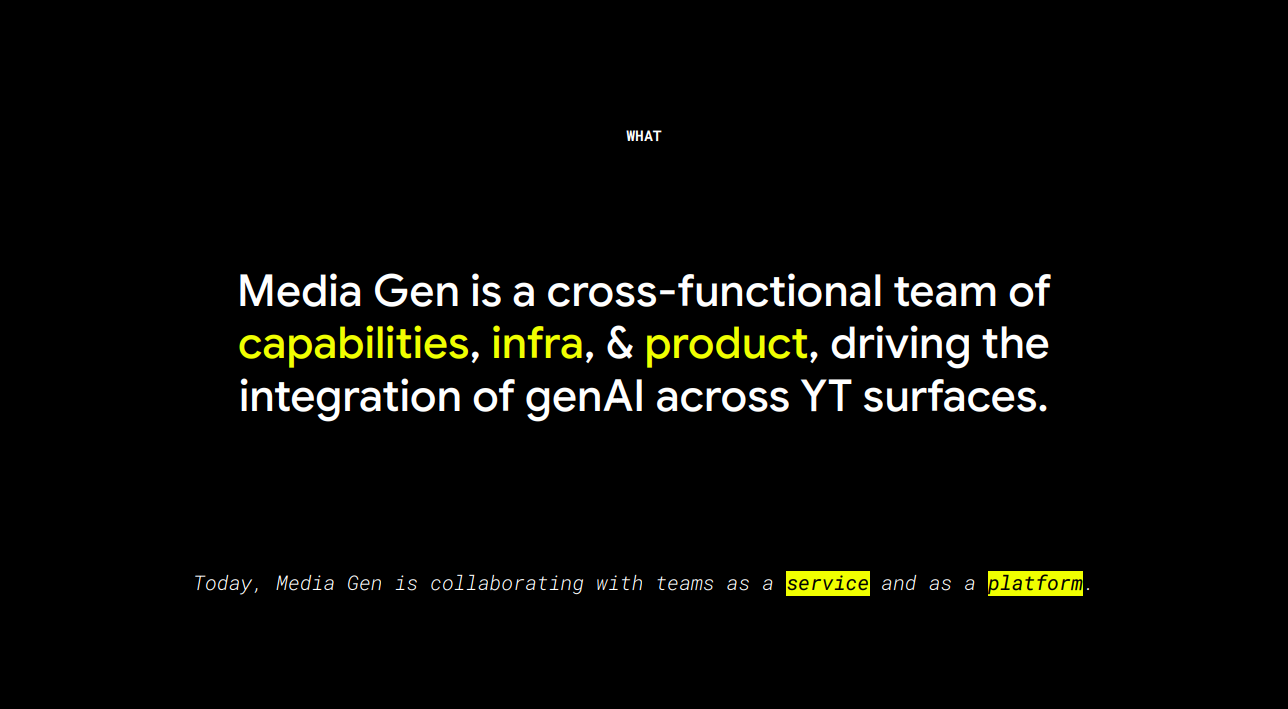
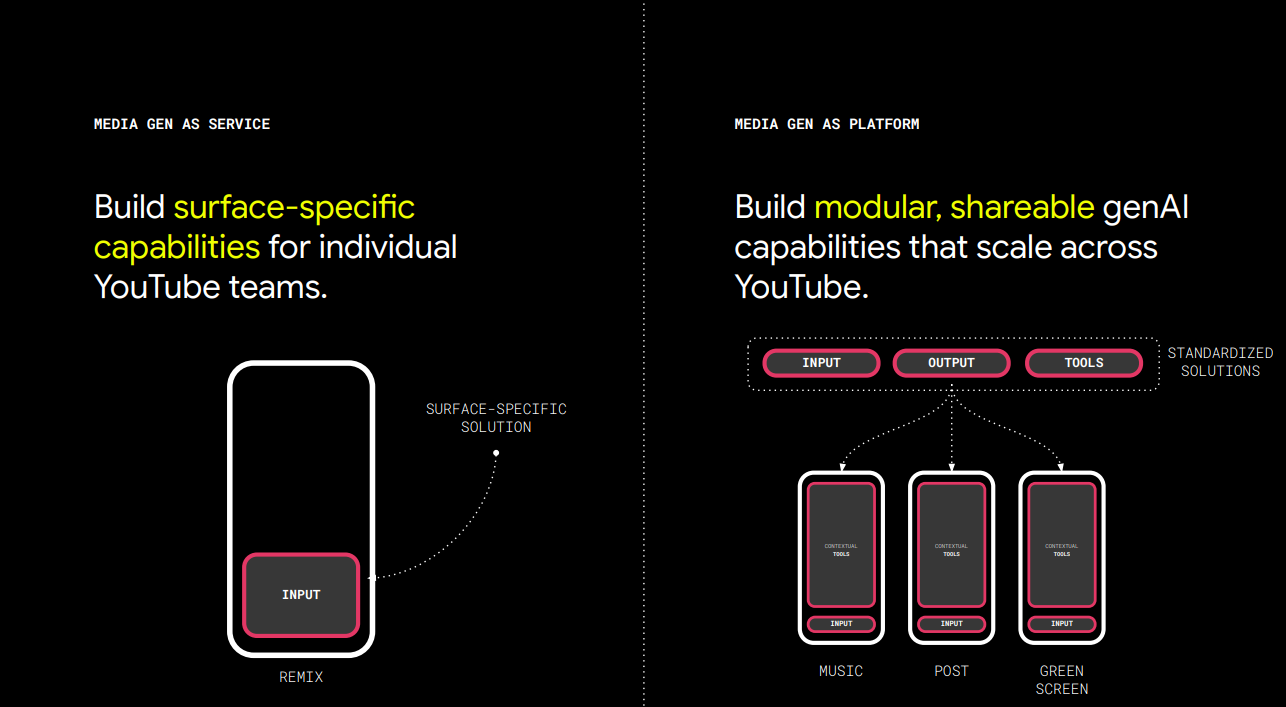
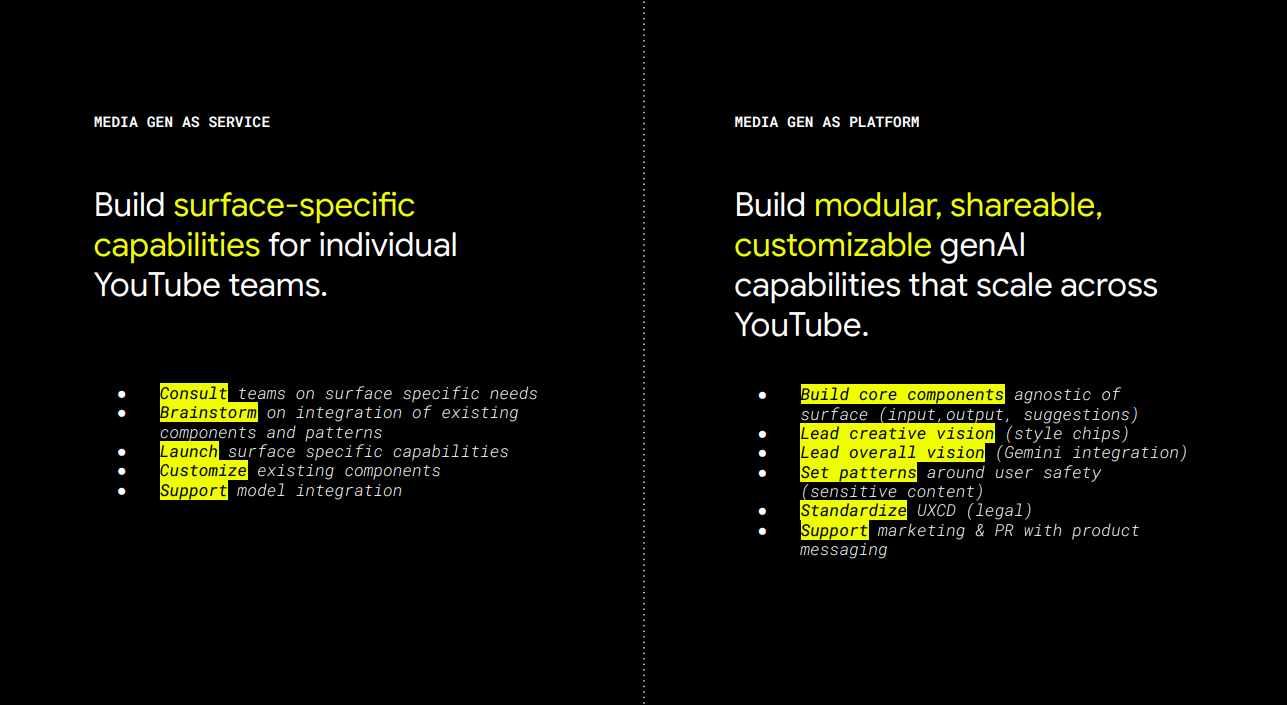
I worked with my cross-functional partners to make the case for platformization, demonstrating how a modular approach would increase velocity and quality across YouTube. The result was an organizational shift from a service model to a platform model, enabling surface-agnostic capabilities, faster shipping, and a consistent user experience across every surface we touched.
Problem
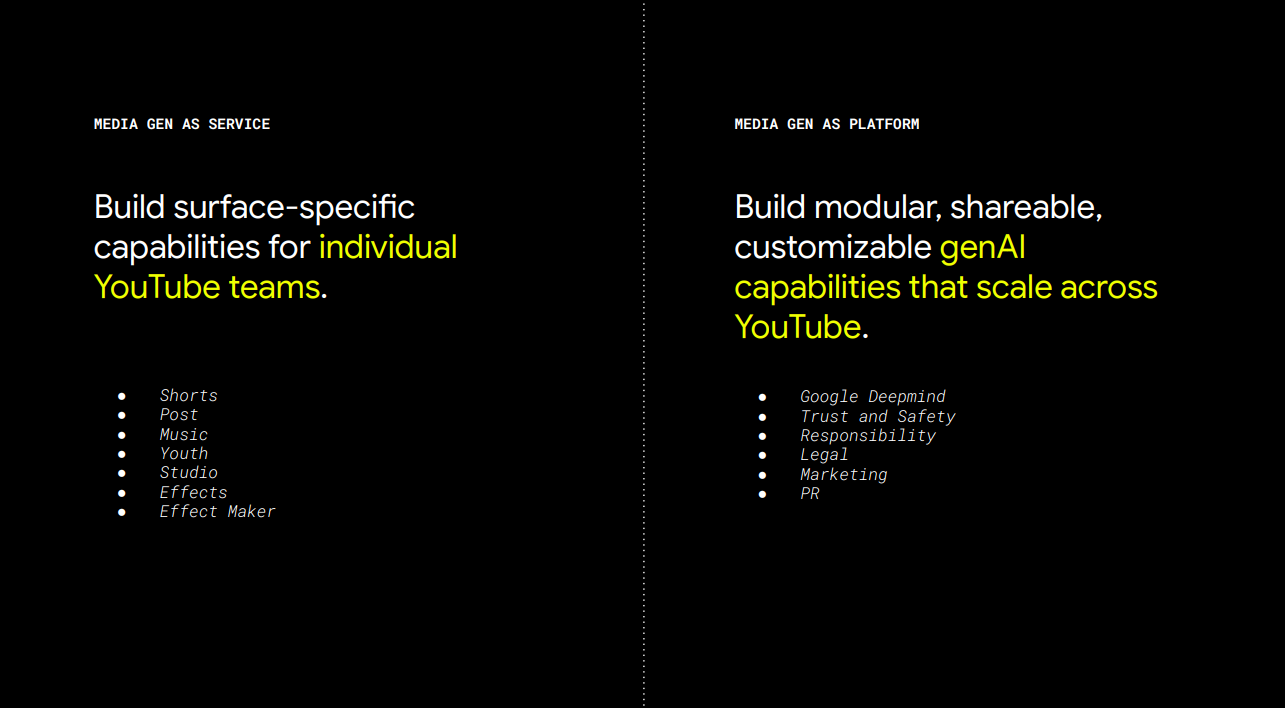
As the only GenAI creation team at YouTube, we were fielding requests from teams across the platform, Shorts, Post, Music, Youth, Studio, Effects, and Effect Maker, building surface-specific capabilities for each, while navigating competing priorities and timelines. Every team wanted to own their own look and feel, which meant redundant technical effort and an increasingly inconsistent user experience across YouTube. The team was spread thin, spending more time strategizing and problem-solving with individual partners than actually shipping and our velocity showed it.
Process
I worked closely with my cross-functional partners to develop a strategy that would let us support as many teams across YouTube as possible, efficiently, and without sacrificing the quality of the user experience. The goal was simple: no matter which surface a user was on, the experience should feel consistent and cohesive.
The challenge was organizational as much as it was design. We were a new team, and teams across YouTube were used to doing things their own way. Convincing leads to align around a shared platform required real relationship-building and a clear value proposition. We had to show, not just tell, that this would be a win for everyone: faster shipping for our partners, better experiences for users, and less redundant effort across the board. So we worked cross-functionally to build a strategy that proved exactly that.
Solution
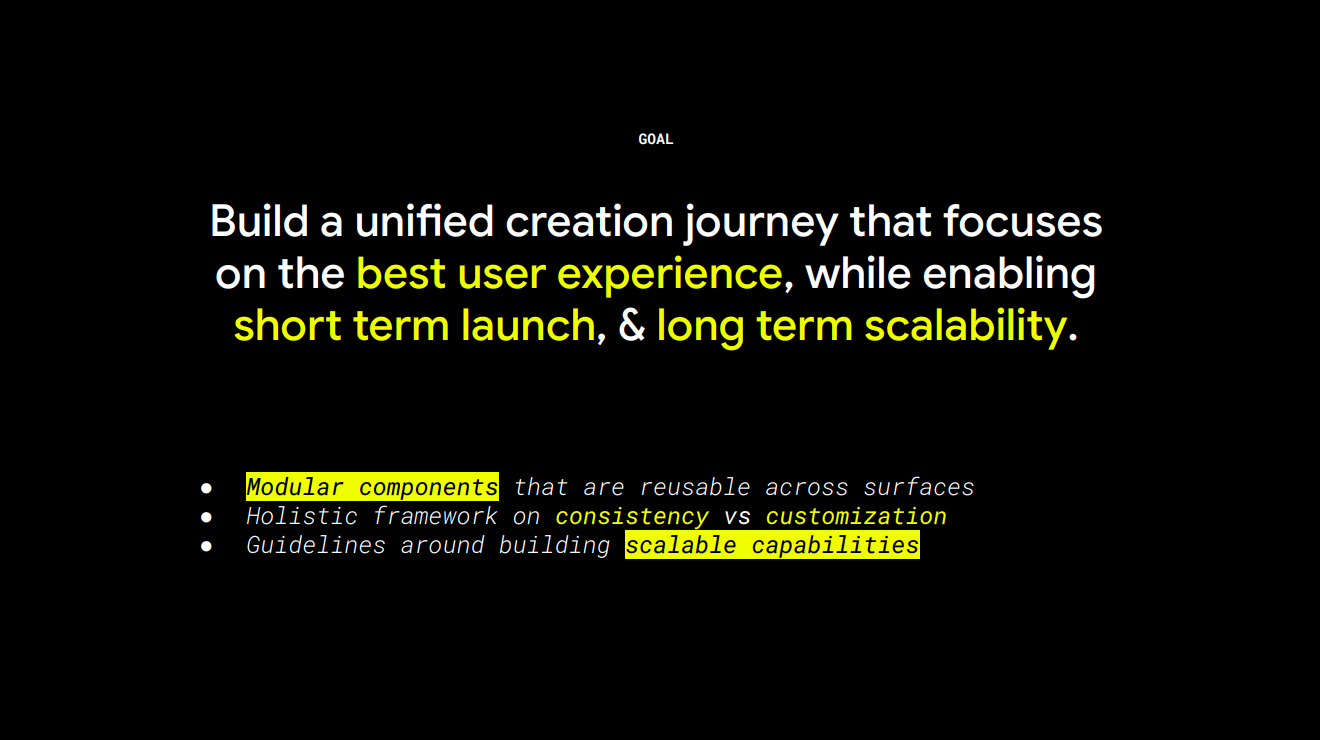
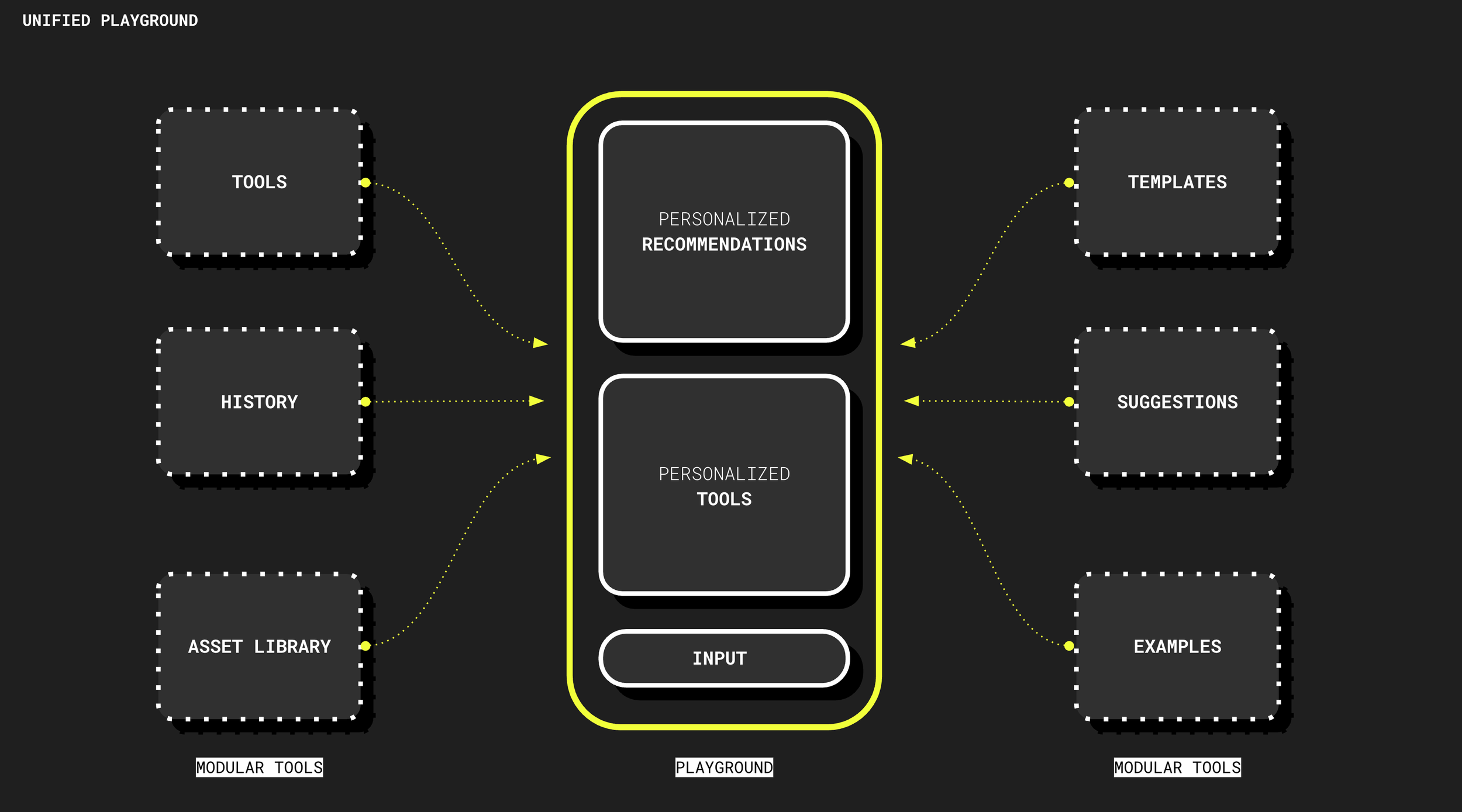
A unified creation journey with the user need at the center. To enable that, we shifted to working as a platform team, building modular components reusable across surfaces rather than custom solutions for each team. From there we developed a holistic framework defining where consistency was non-negotiable and where customization was appropriate, alongside clear guidelines for building scalable capabilities on both the design and tech side.
User Need
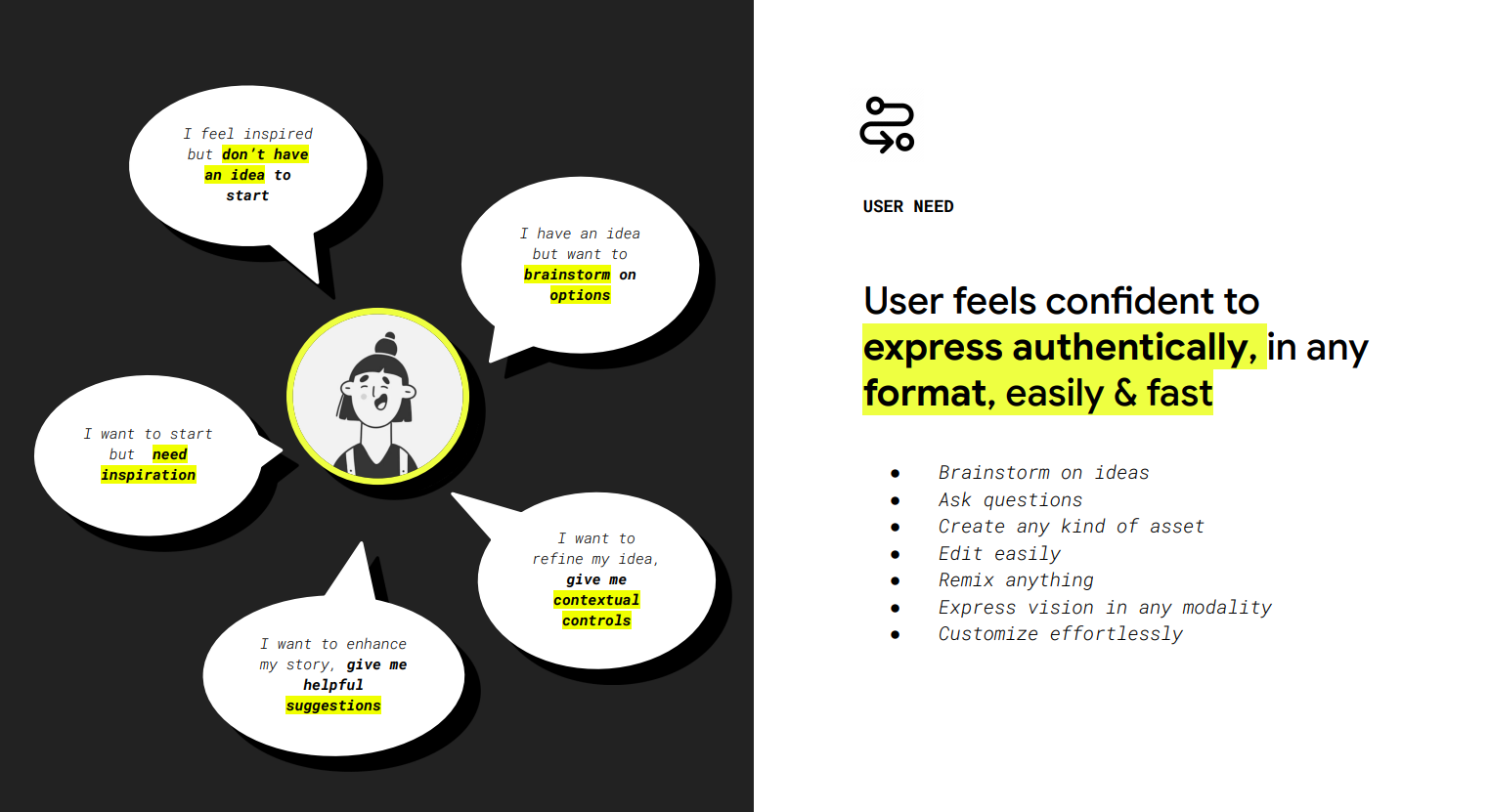
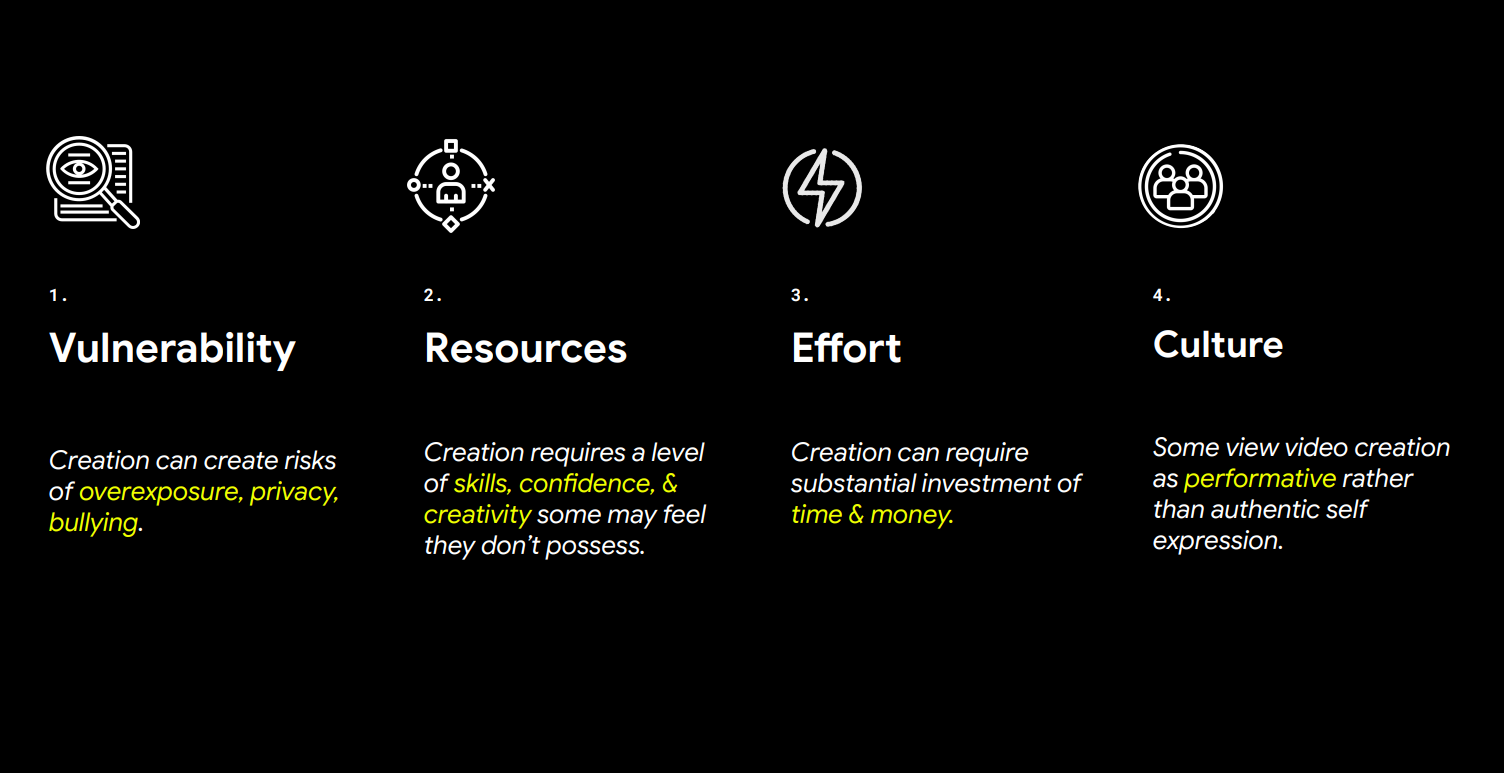
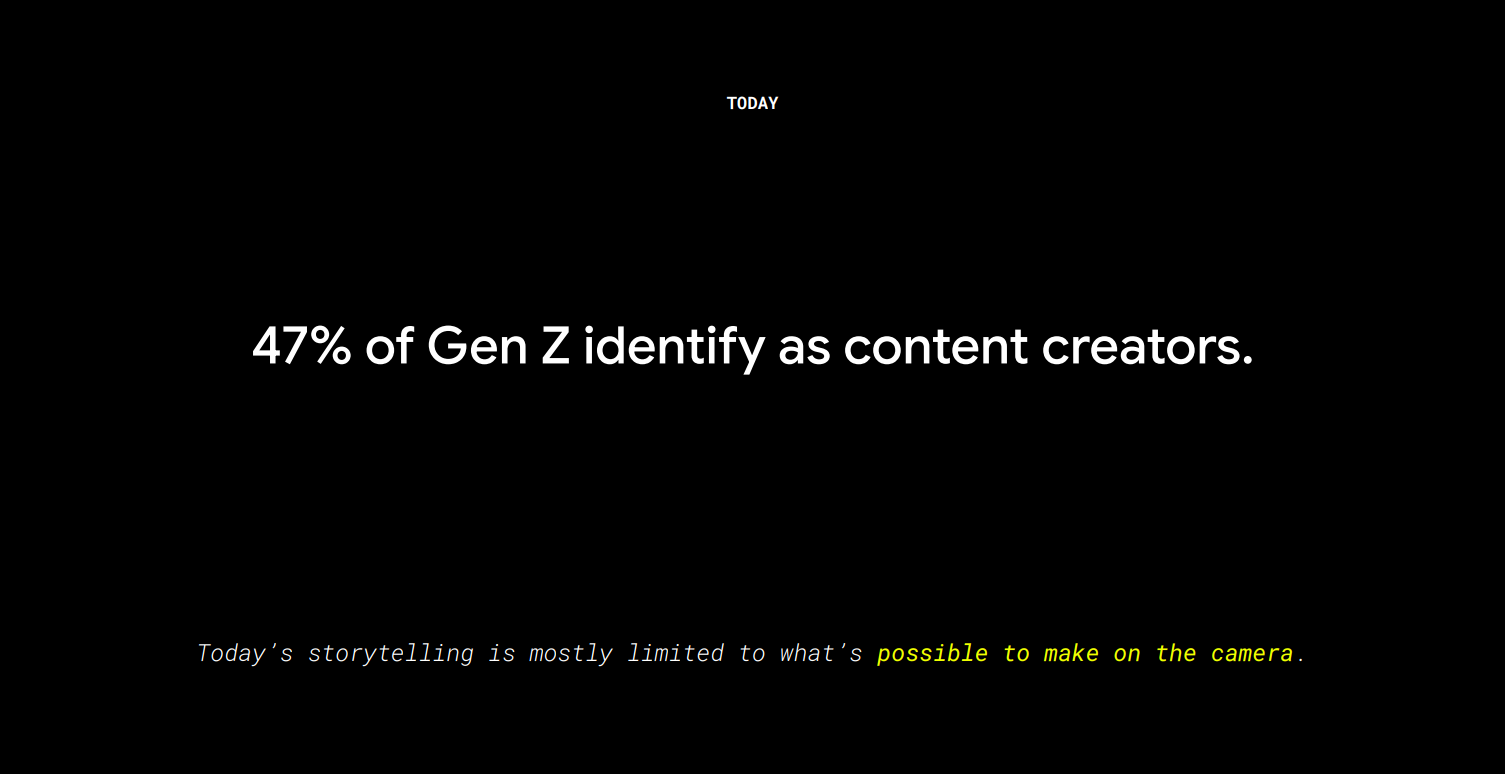
To build the right system, we started with the user. Research told us our primary audience was Gen Z lightweight creators, people who come to the camera but hesitate to post, held back by vulnerability, privacy concerns, lack of confidence, or simply not knowing where to start.
What they needed wasn't more tools, it was a clearer path through the creative process: brainstorming ideas, generating assets, editing, remixing, and customizing with as little friction as possible. That insight shaped how we approached the system, not as a collection of features, but as a set of simple, modular capabilities that fit together seamlessly, designed for short-term launch and long-term scalability.
Design Principles
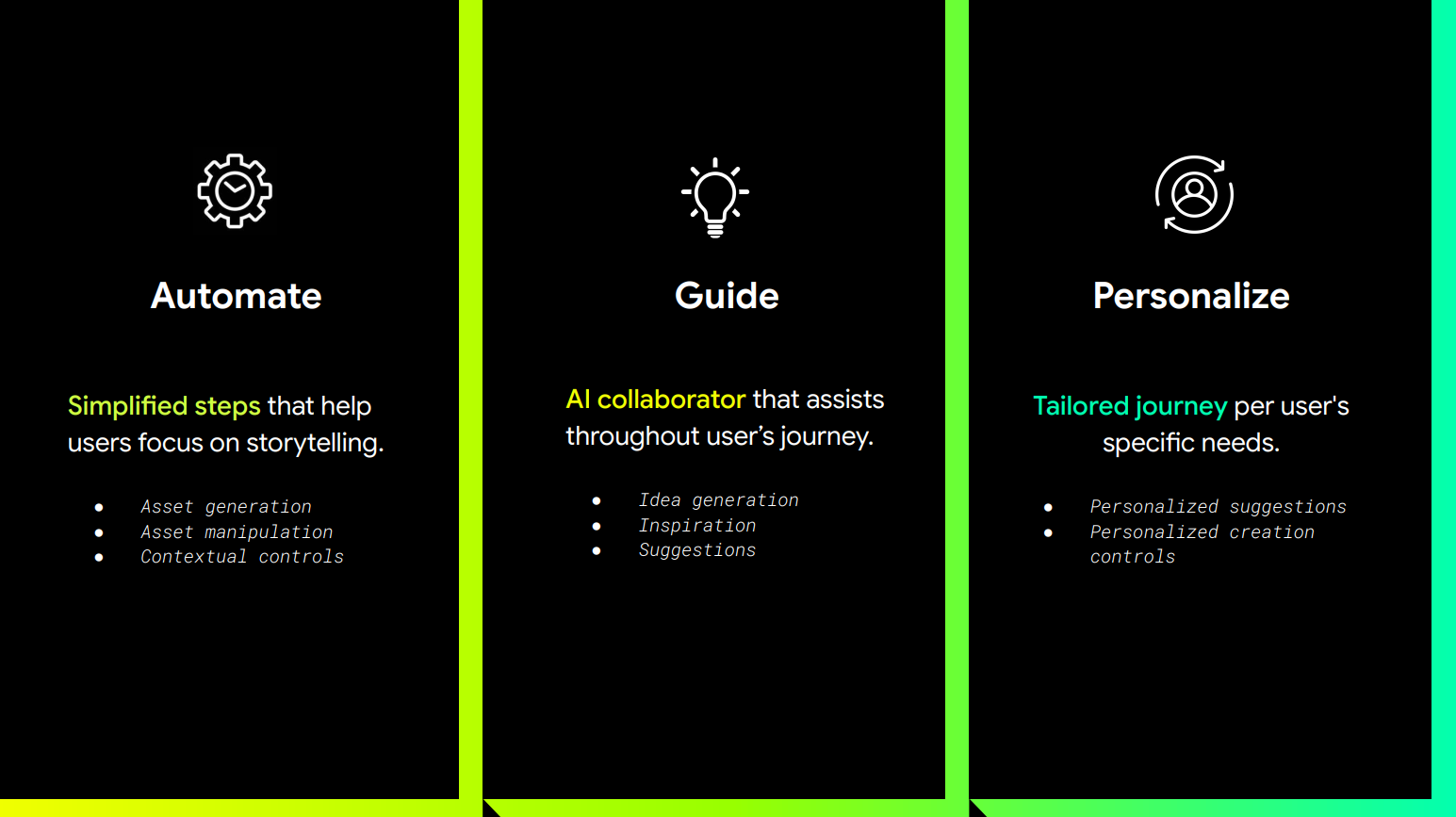
From our user research, we distilled our approach into three core principles:
Automate — remove the redundant and technical steps, simplifying them into intuitive interactions so creators can stay focused on storytelling rather than process.
Guide — support users across the full journey from idea to asset generation to editing, so no one gets stuck or lost along the way.
Personalize — tailor the experience to each user's specific needs, skill level, and creative intent, so the system feels like it was built for them.
Entrypoints
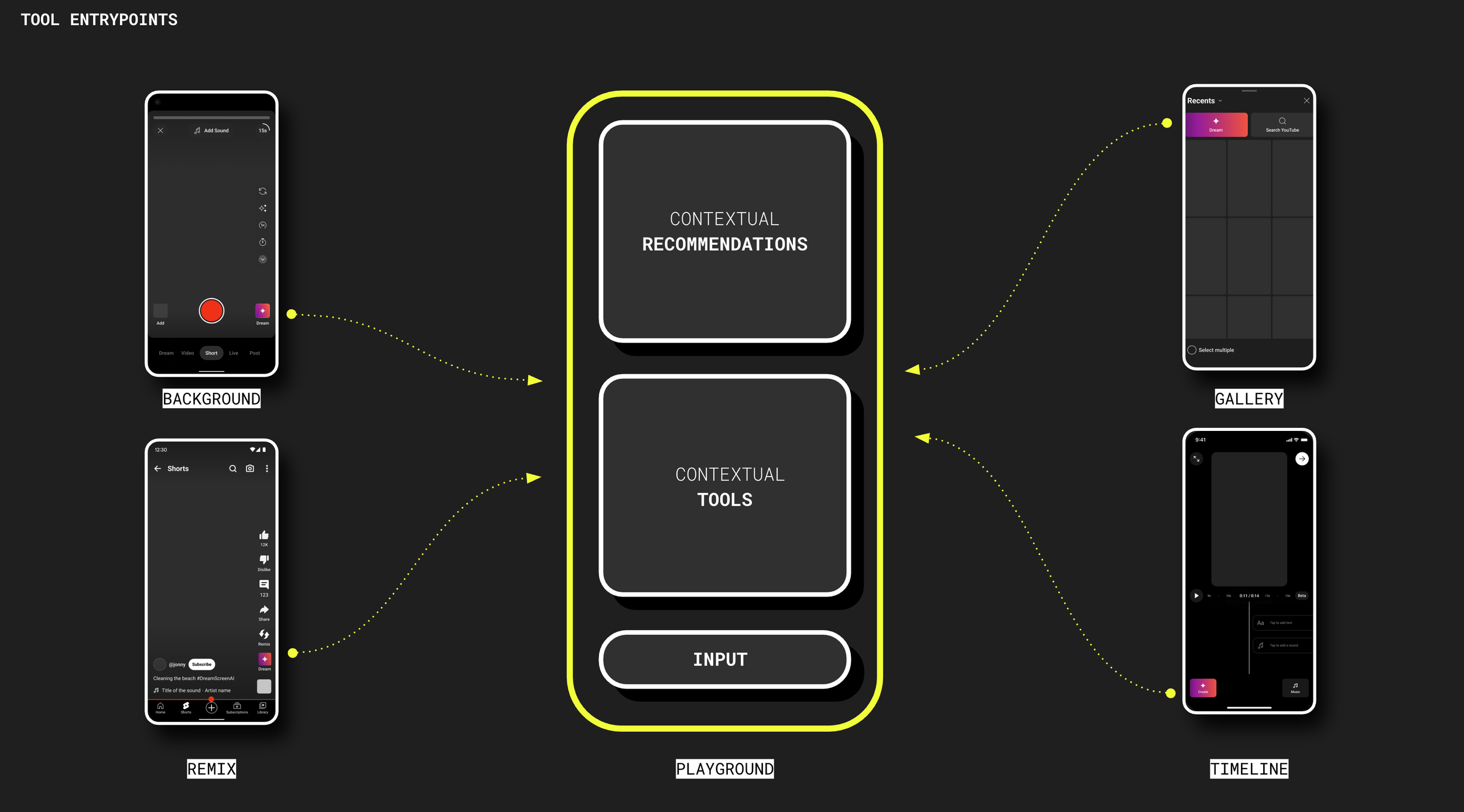
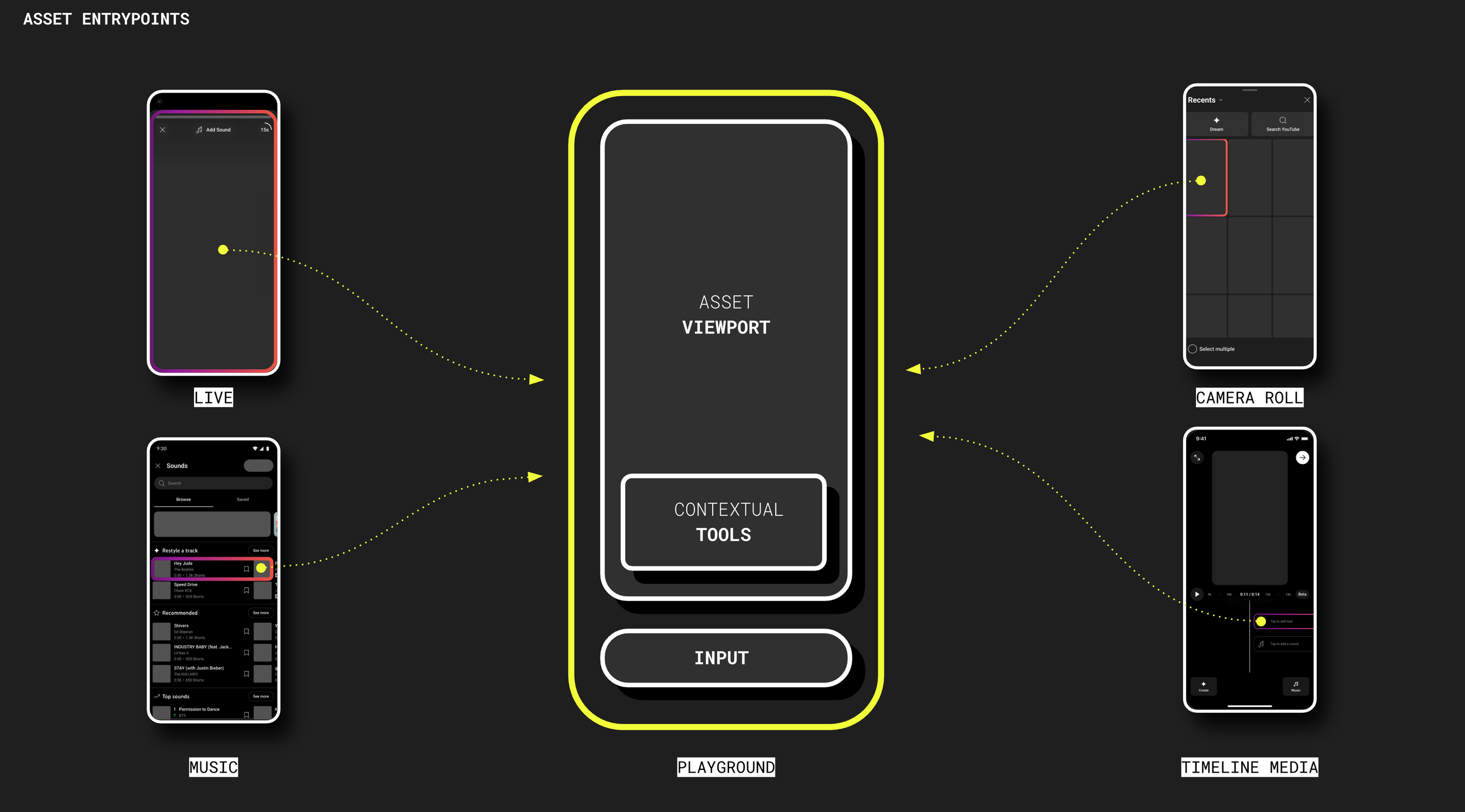
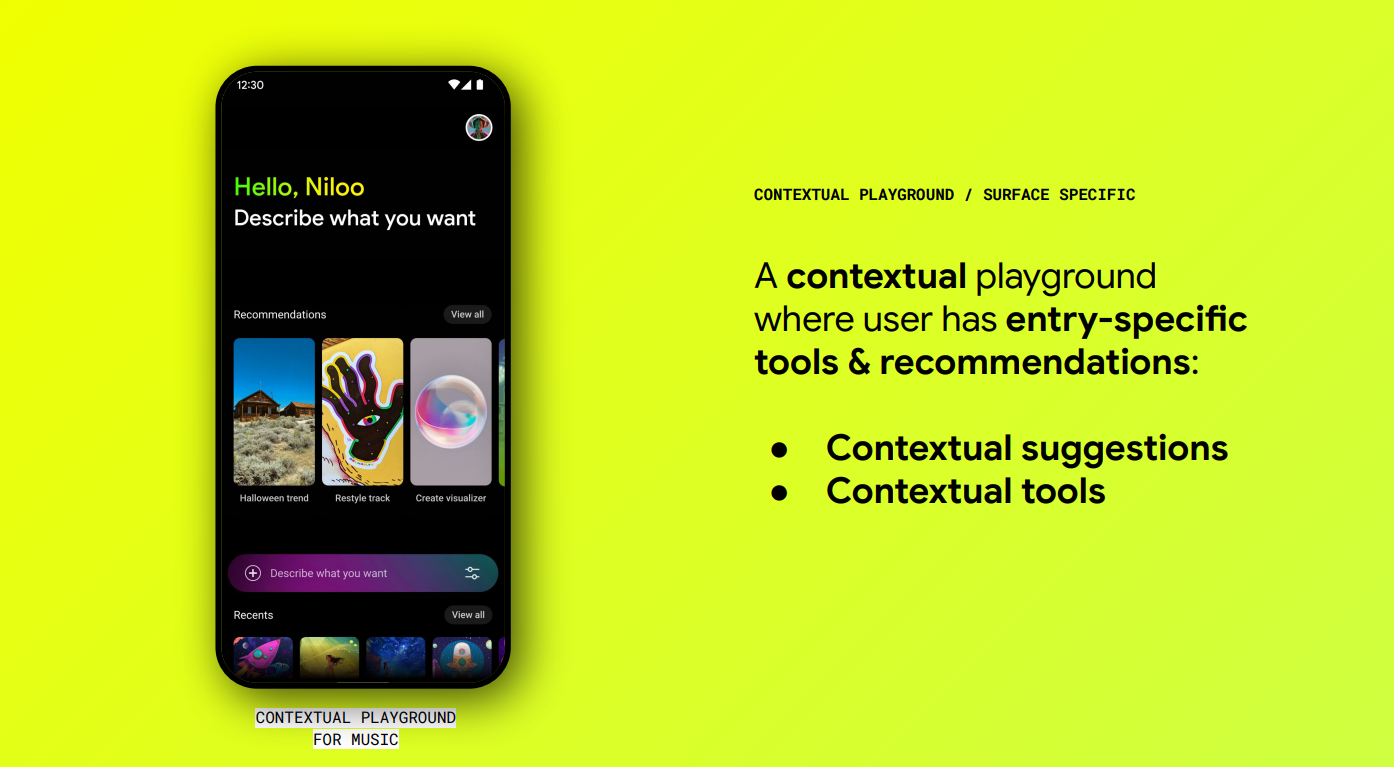
With our principles defined, we had to solve for context. Users enter the creation journey from many different places across YouTube: Shorts, Effects, Camera, Upload, Post, and more, and the experience needed to feel consistent no matter the entry point.
The analogy that guided our thinking: no matter which entrance of the park you walk through, you arrive at the same Playground with all the tools you need. But each entrance gives us a signal about what that user is looking for, so while the Playground stays consistent, the tools surface contextually based on where they entered, making the experience feel tailored without requiring a different system for every surface.
Creation Journey
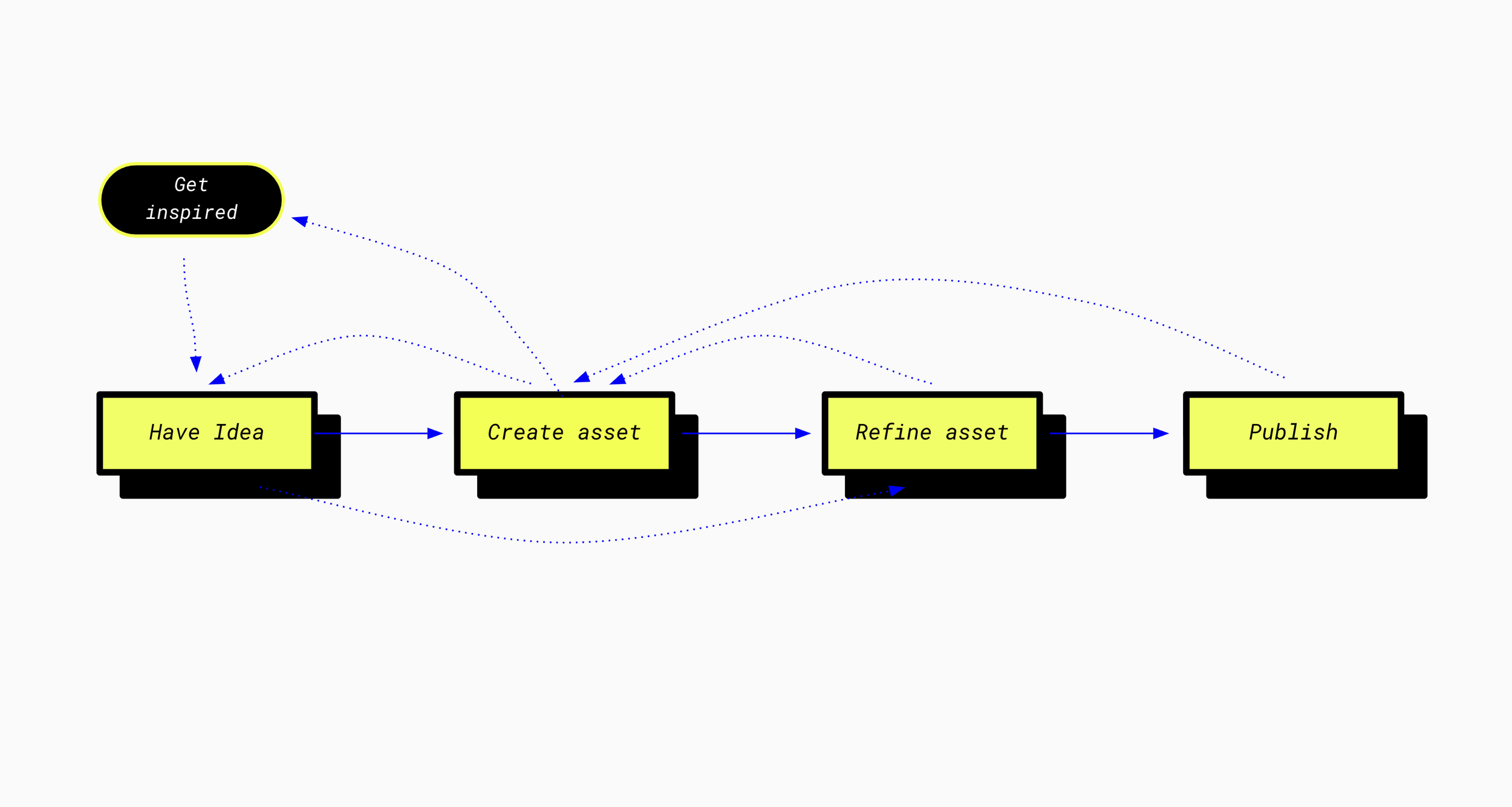
We mapped user needs against the creation journey to understand how the system needed to behave. A key research insight shaped everything: creation is non-linear. Users move back and forth between steps, brainstorming, generating, editing, second-guessing, starting over, until they're ready to publish. There's no clean path from A to B.
That meant the system had to be flexible and accessible at every stage, allowing users to move fluidly through their journey without hitting dead ends or losing their progress. The architecture had to support how people actually create, not how we wished they would.
Creation Steps
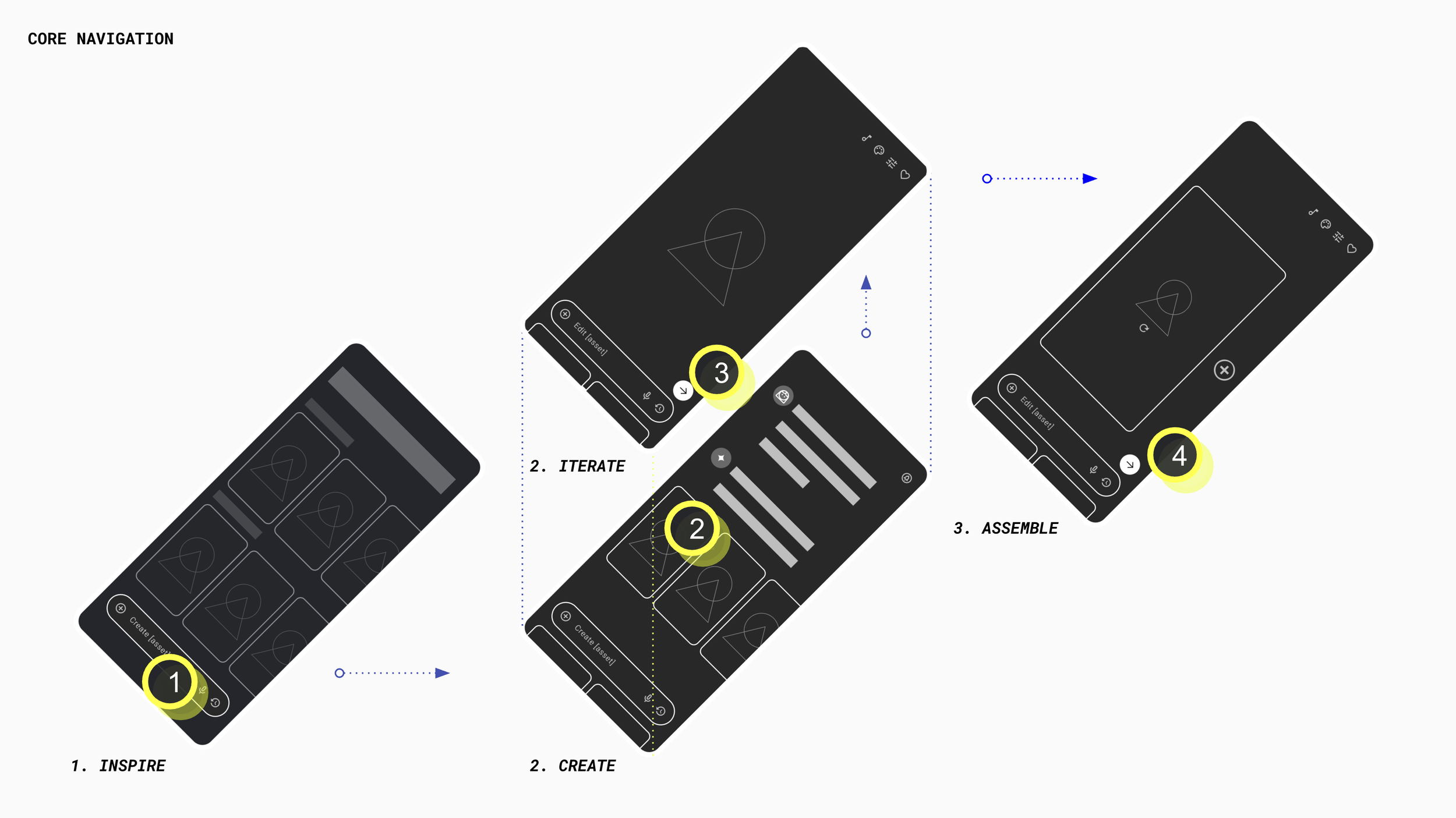
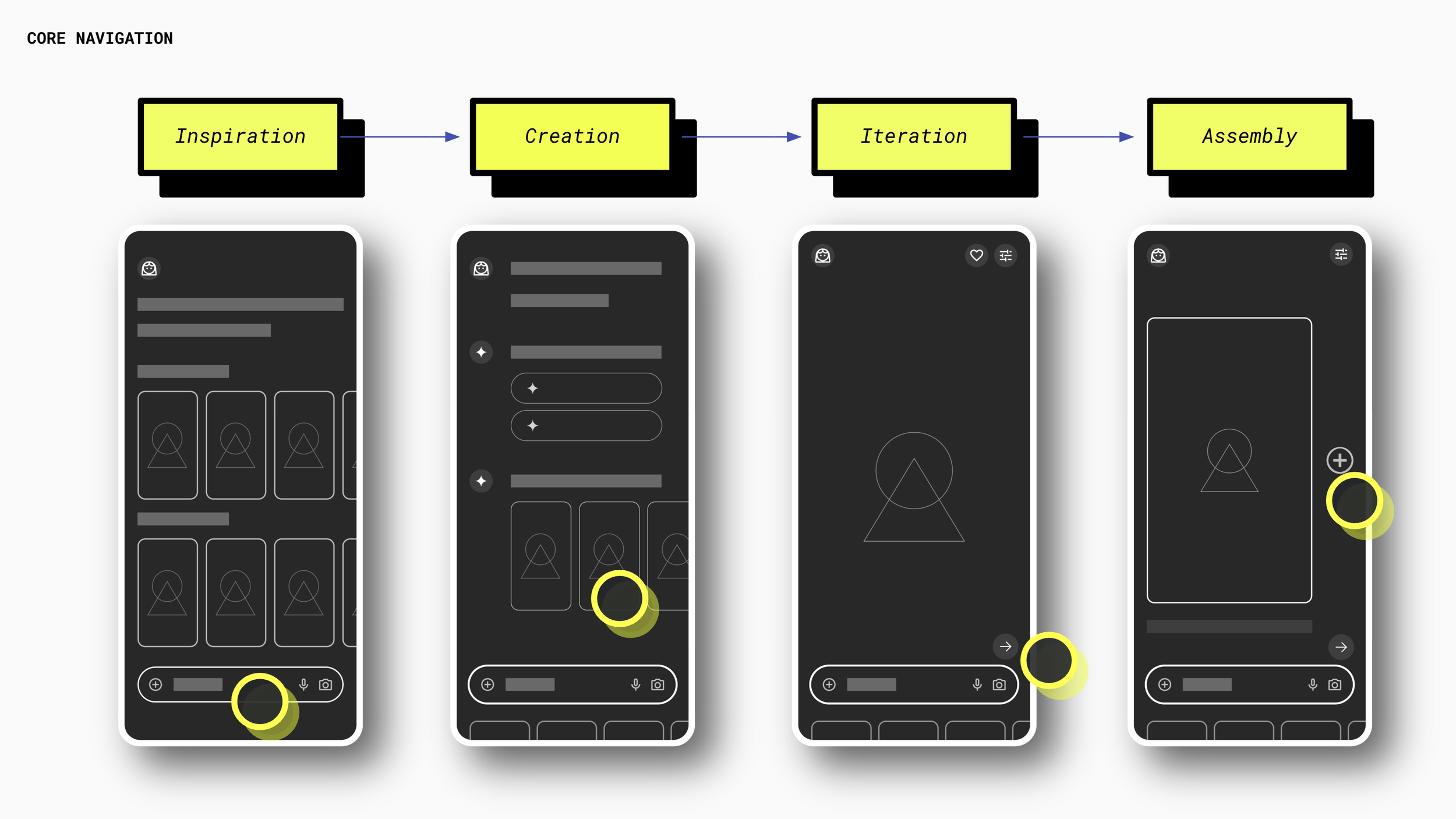
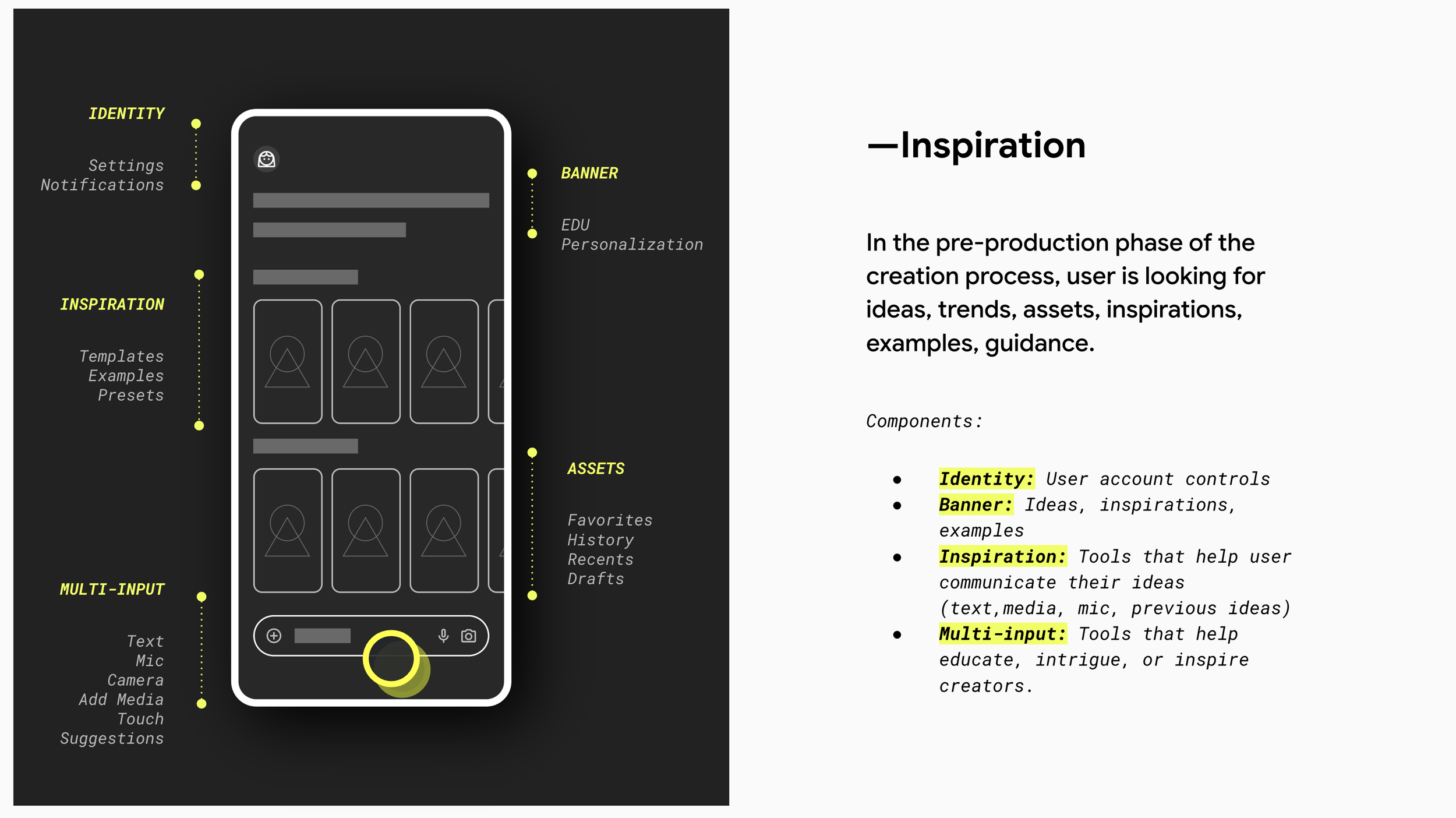
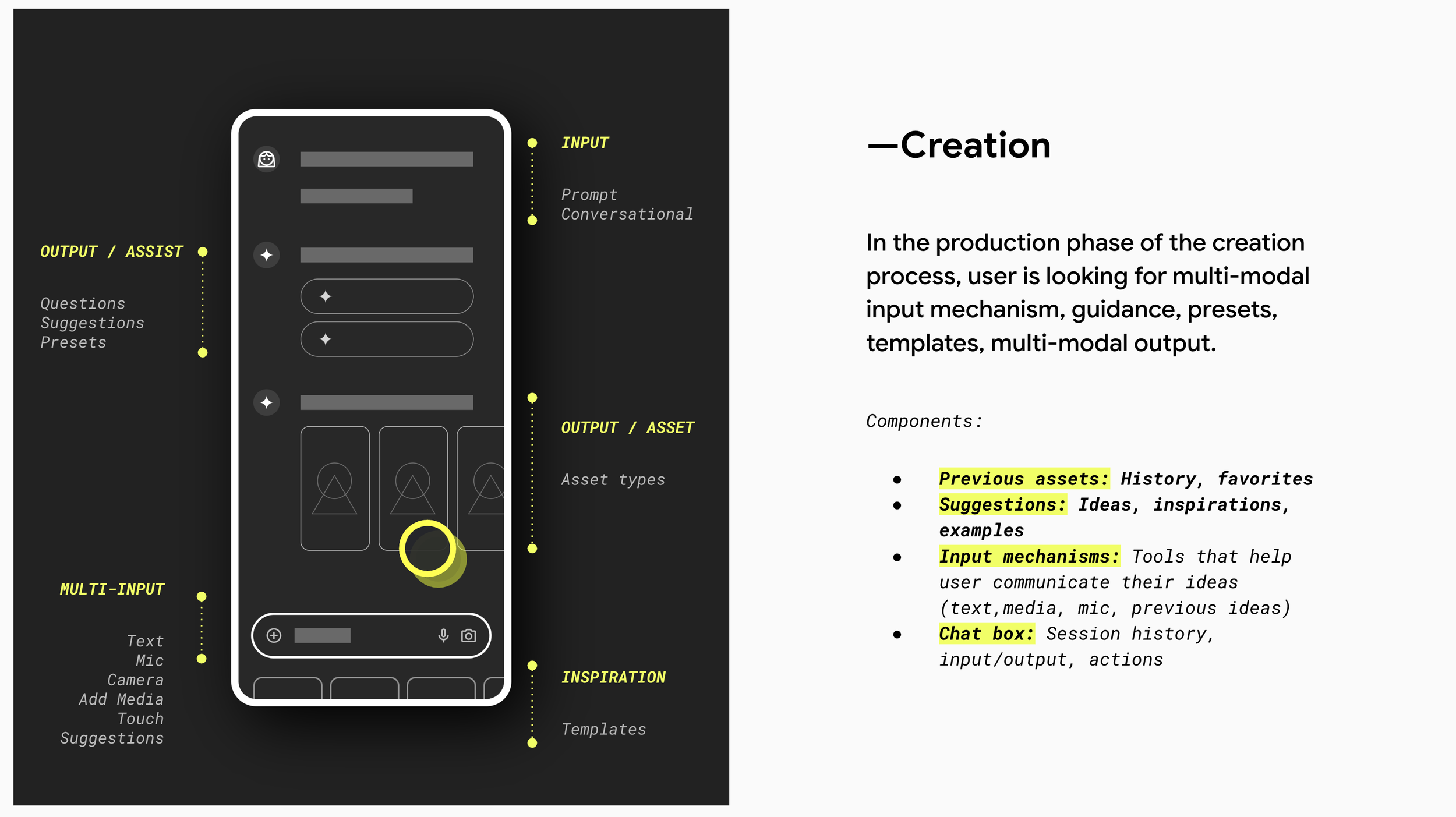
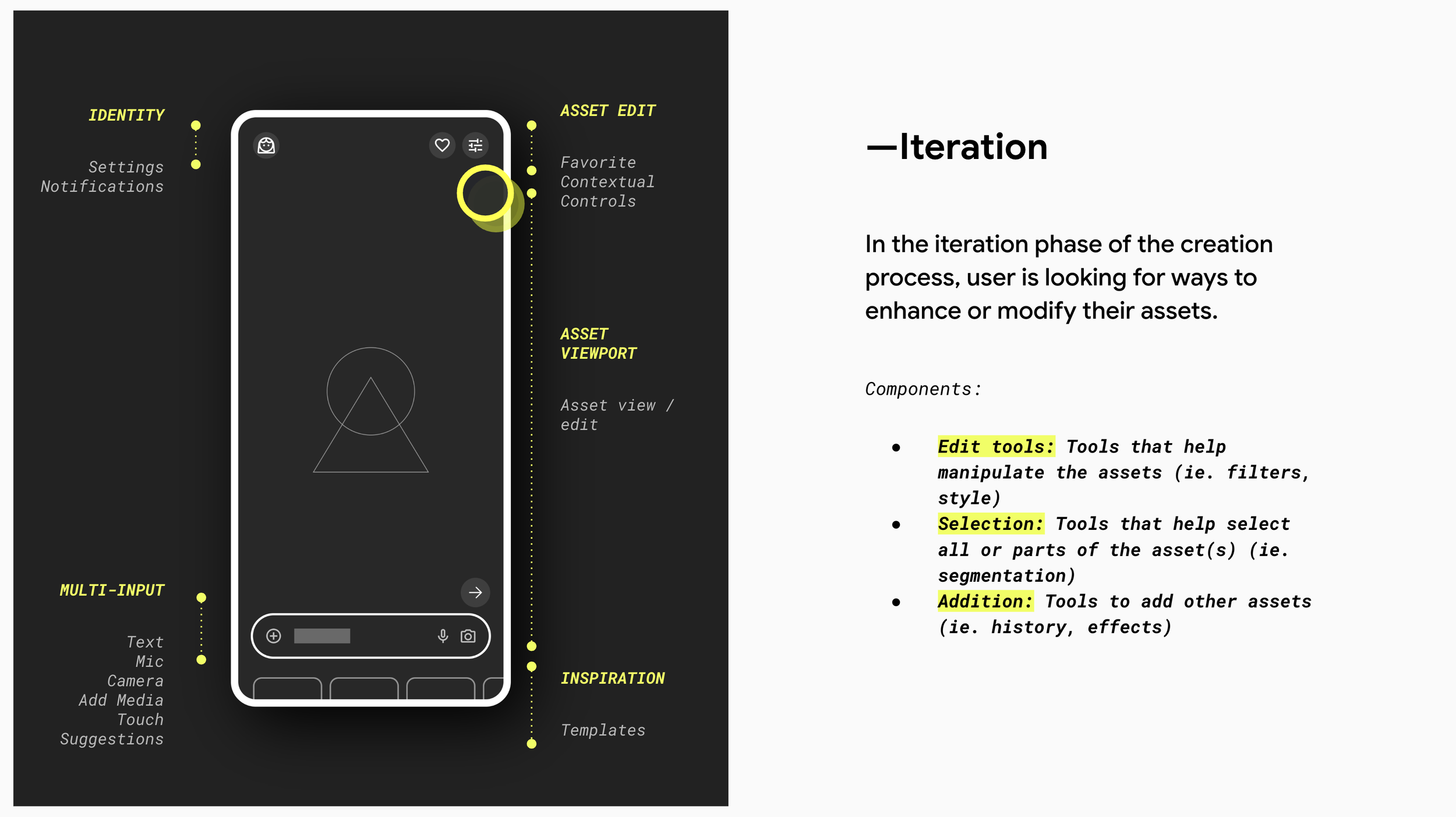
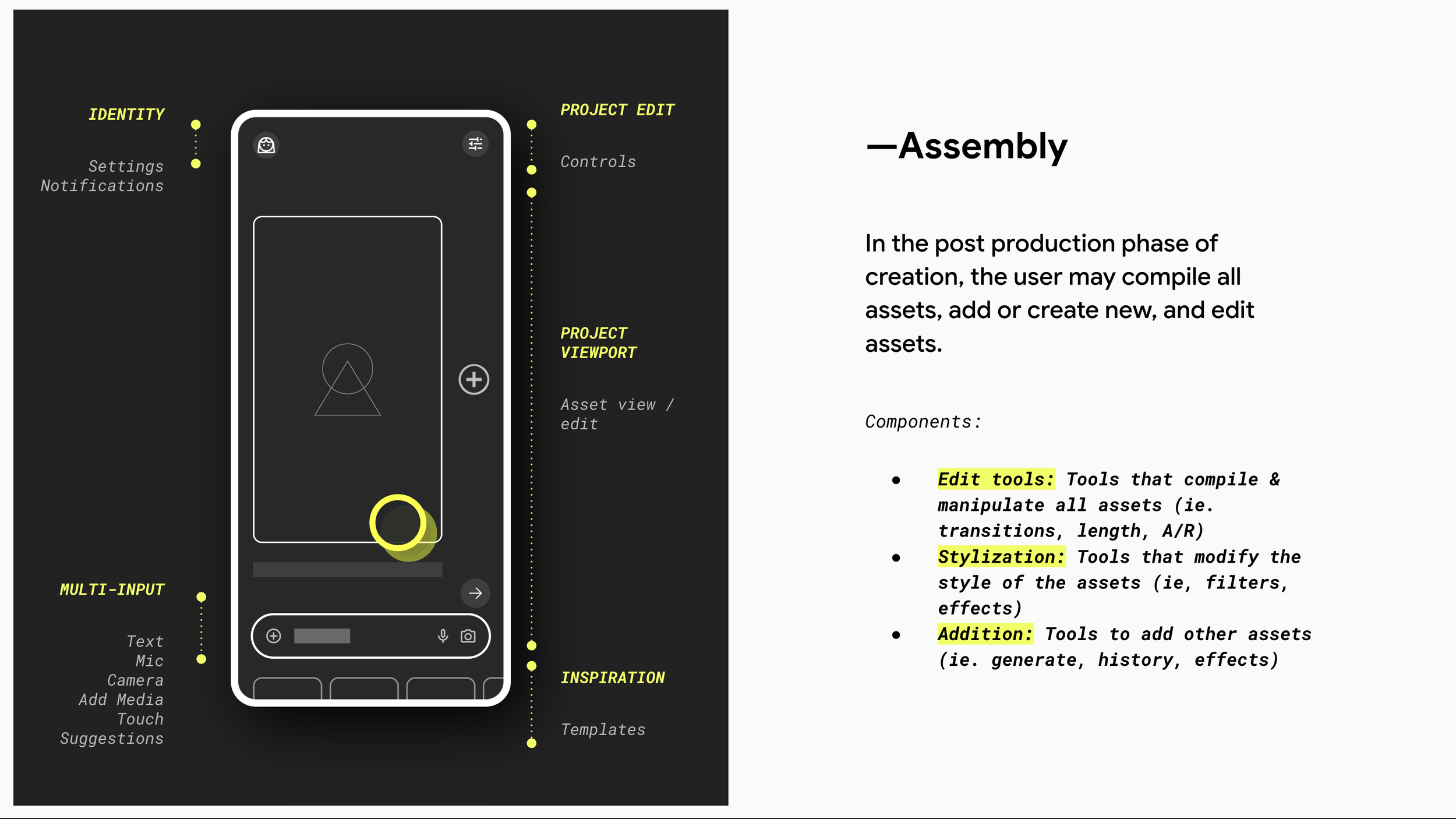
Based on our research, we distilled the creation journey into four distinct user intents: inspiration, creation, iteration, and assembly. Each intent mapped to specific user needs, giving us four clear modules with defined components that fit within each.
This framework shifted our team from reactive to intentional, we could now prioritize against real user needs rather than individual surface requests, and it gave us the evidence to prove to stakeholders why operating as a platform team was the right model for YouTube.
Explorations
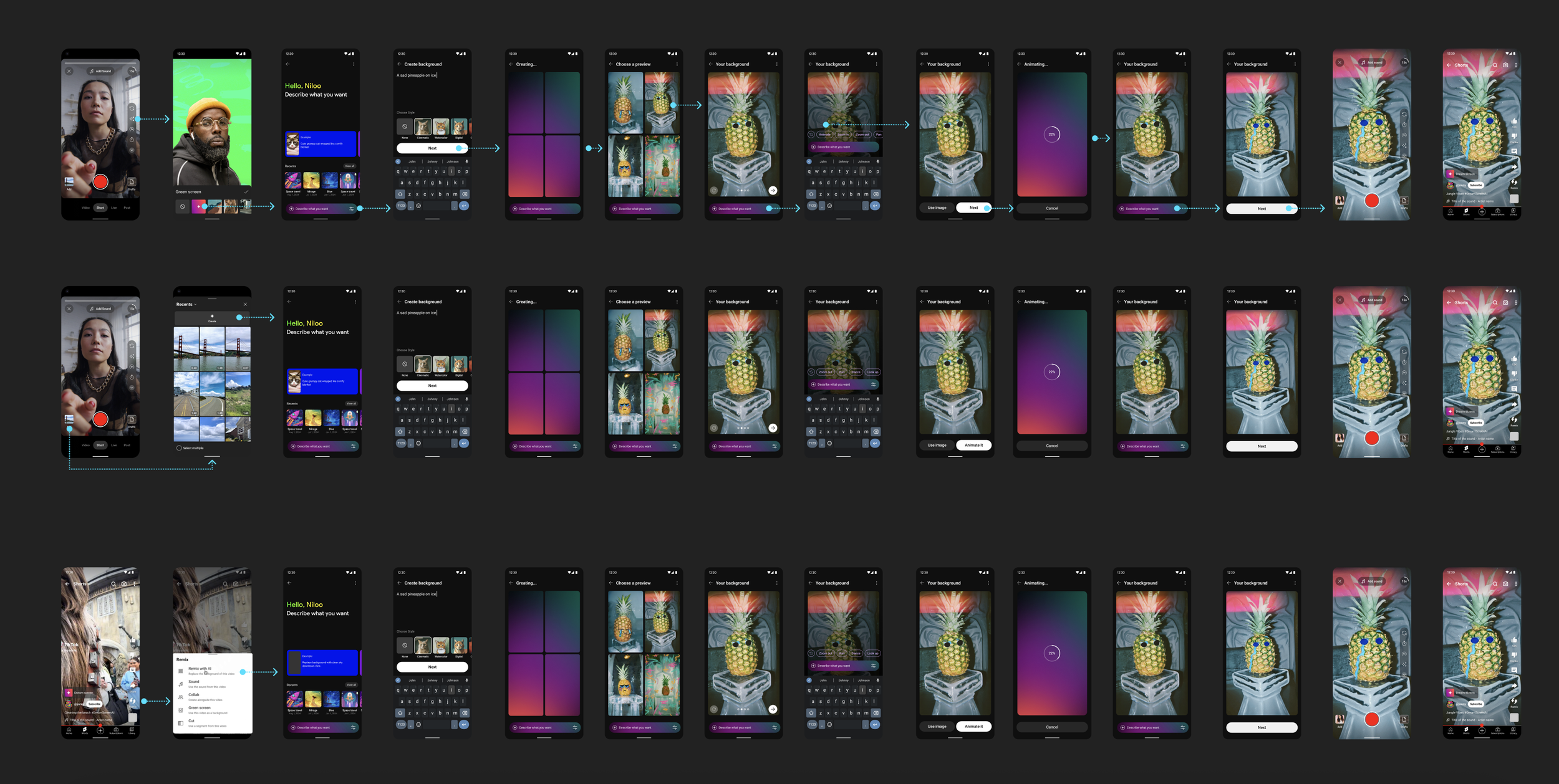
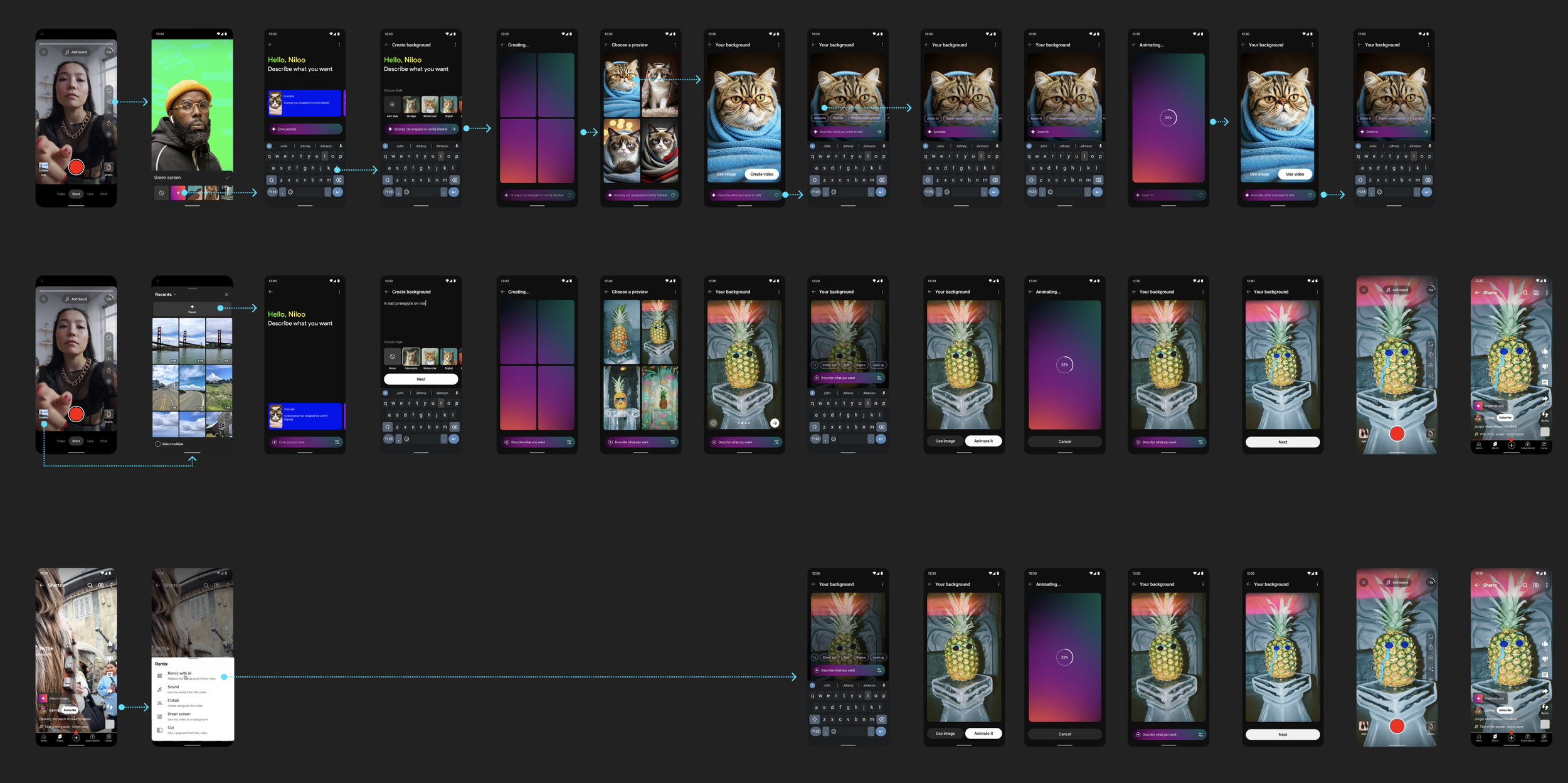
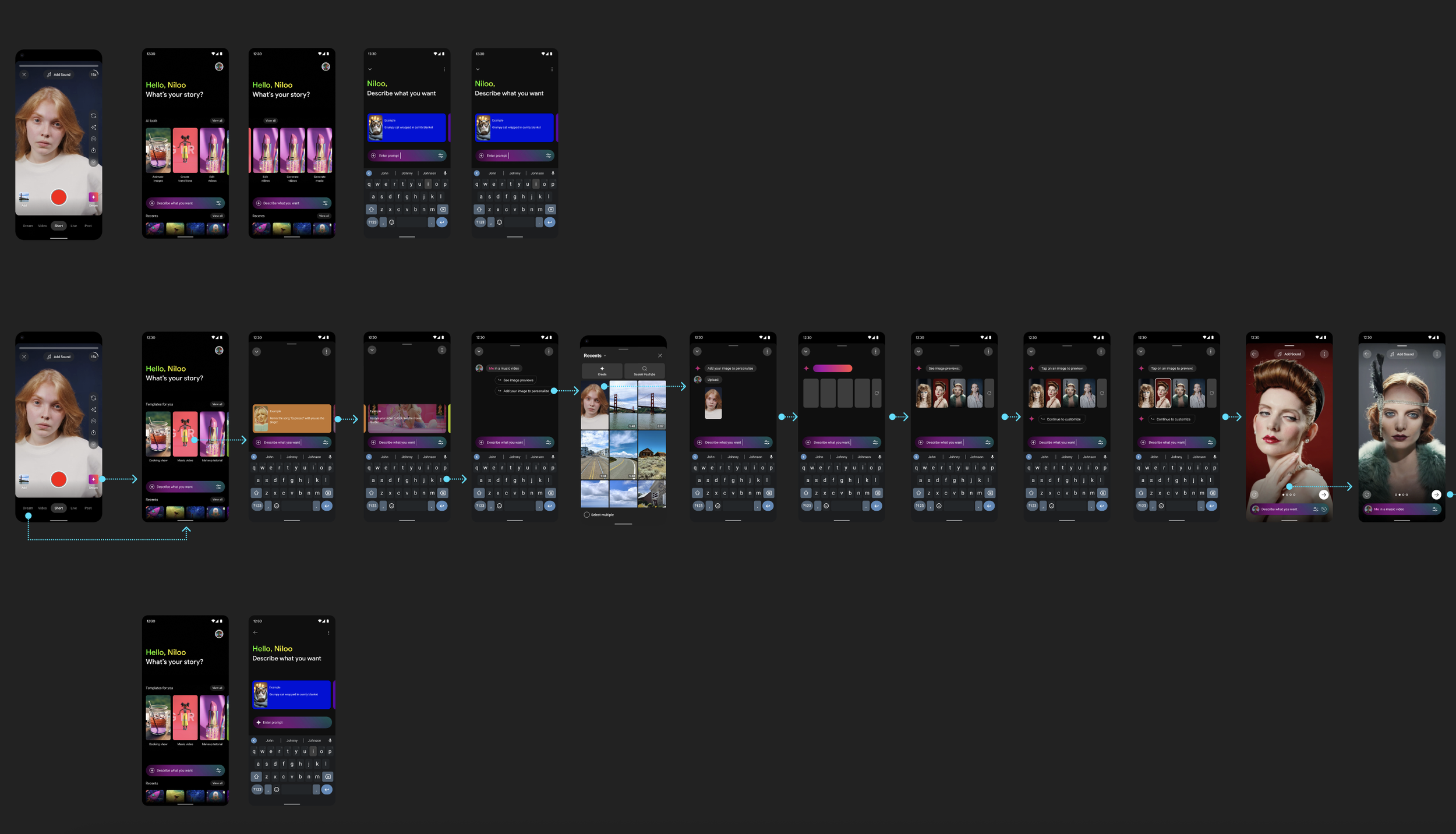
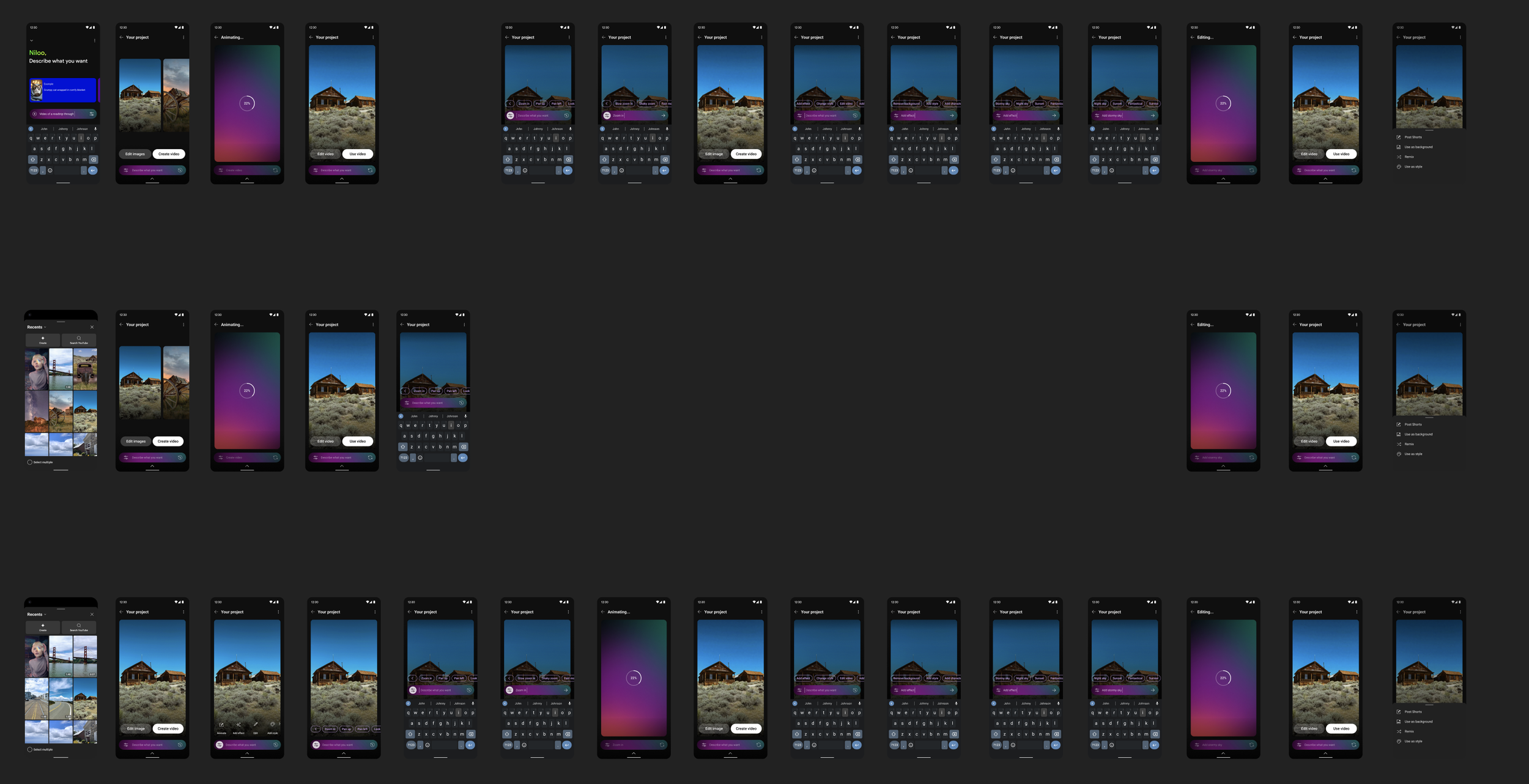
With the design system defined, we moved into exploration. I hosted multiple workshops with cross-functional partners across every YouTube surface we collaborated with, understanding each team's specific needs and goals. From there I ran rounds of design workshops with designers across teams, exploring different patterns and UI solutions to ensure every surface's user needs were represented in a system that could be shared across all of them.
Trust & Safety
This phase also included building safety in from the start. I worked closely with Trust and Safety to embed guardrails directly into the design, not as an afterthought, but as a foundational layer. The strategy deck I created in collaboration with Trust and Safety partners became our three-year roadmap for GenAI creation across YouTube.
A key insight from this work: making the safety experience contextual, directly communicating to them, gave users a sense of ownership and accountability from the very beginning. We learned that when users feel personally invested in the experience early on, it meaningfully increases their sense of responsibility over what they create and share.
Conversational Creation
In parallel, we began prototyping a chat-based experience for conversational creation, exploring what it would look like for users to create through natural dialogue rather than discrete tool interactions. We went through multiple rounds of iteration, user testing, and prototype development in close collaboration with our UX engineer to explore and validate this new form of creation.
V 1 Design
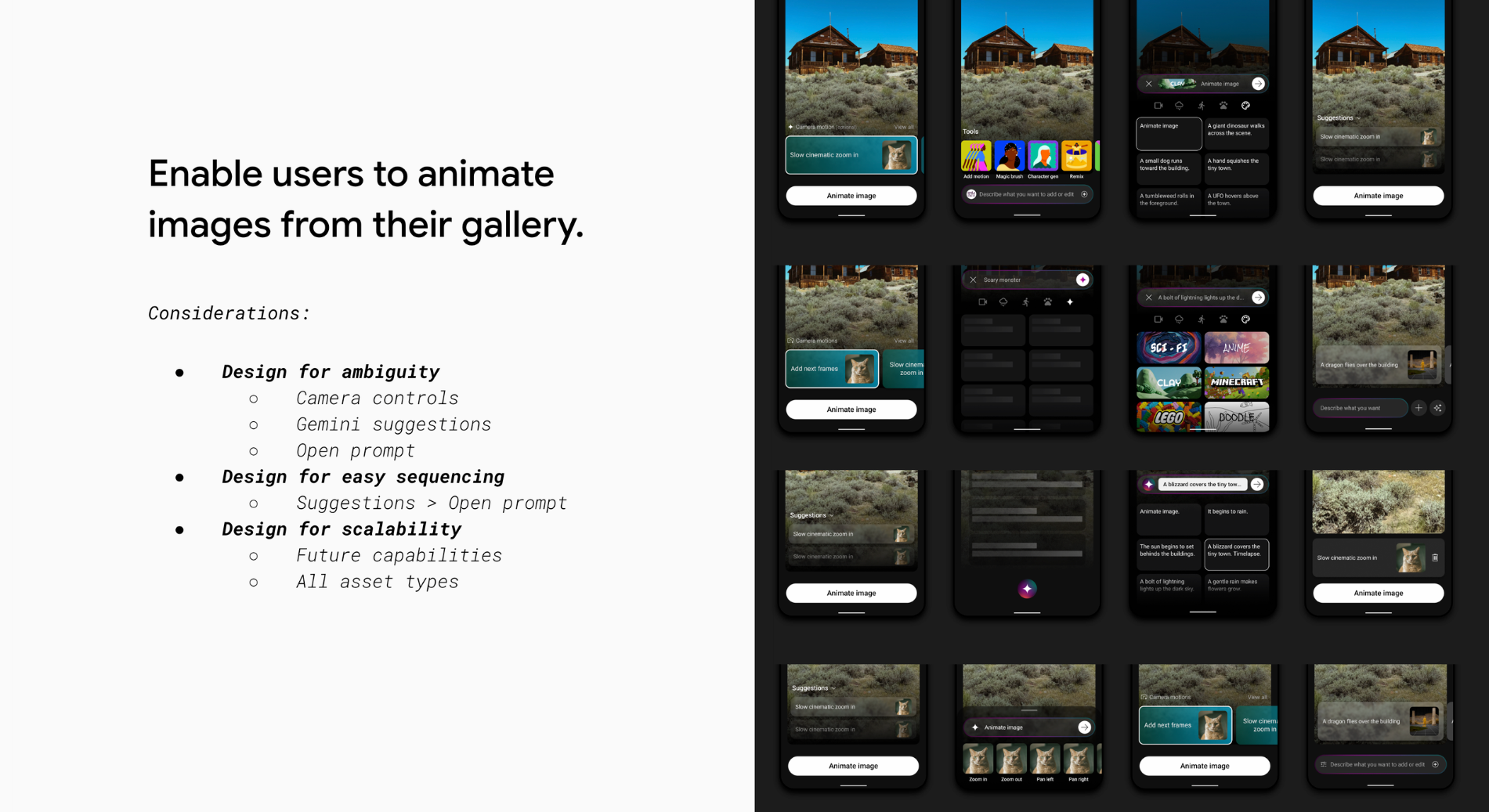
V1 required designing around evolving technical constraints, a reality of building at the frontier of AI. The initial screen brought together our conversational creation UI, style chips, the "Add Style as Reference" feature, and suggestions for animating images, all while keeping the system architecture flexible enough to absorb future capabilities as the technology matured.
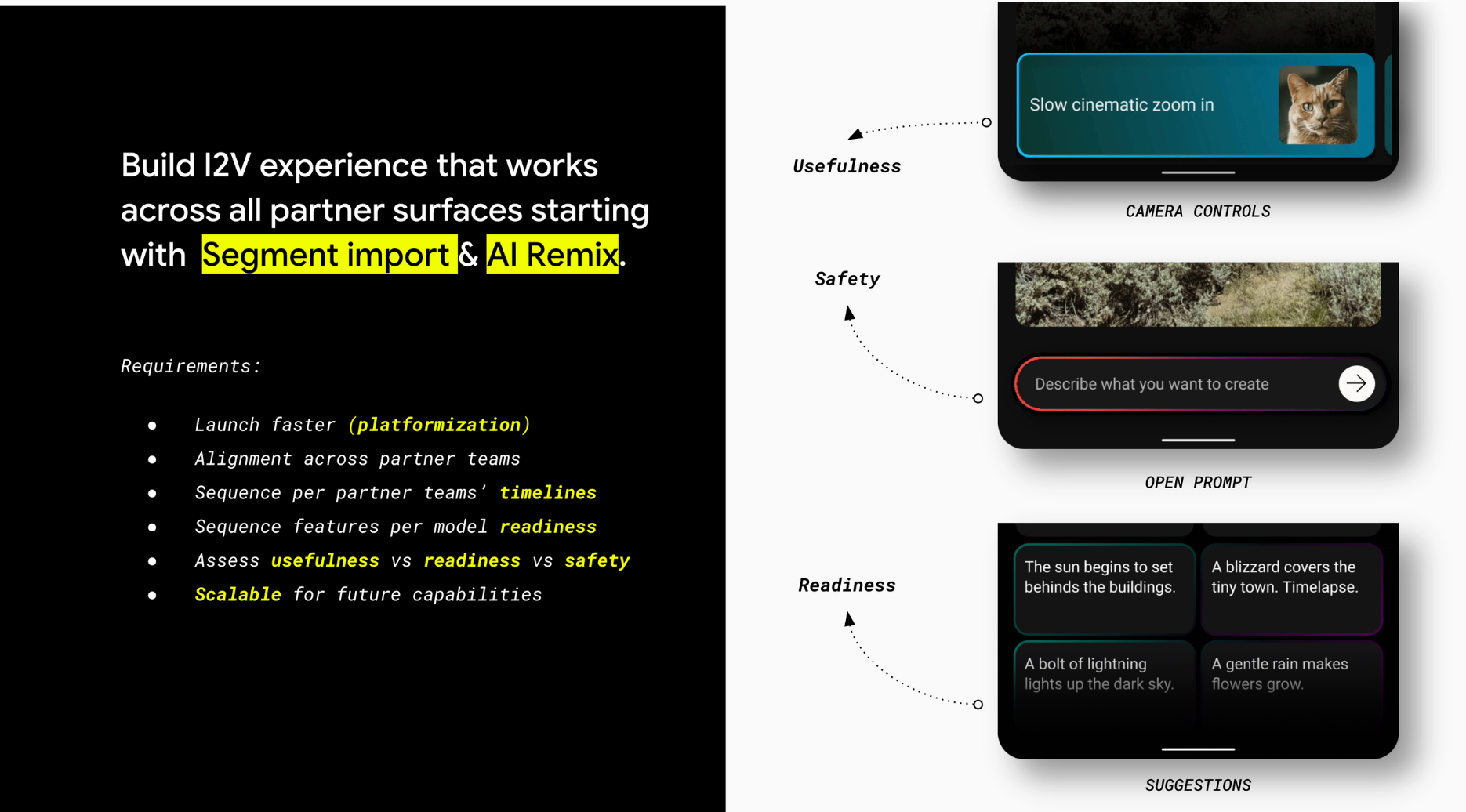
A key tension throughout V1 was knowing when to push for new GenAI-native component, purpose-built for this new form of creation but costly to ship, and when to leverage existing YouTube components to move faster. Getting that balance right was critical to hitting our timeline without compromising the integrity of the experience.
Future Capabilities
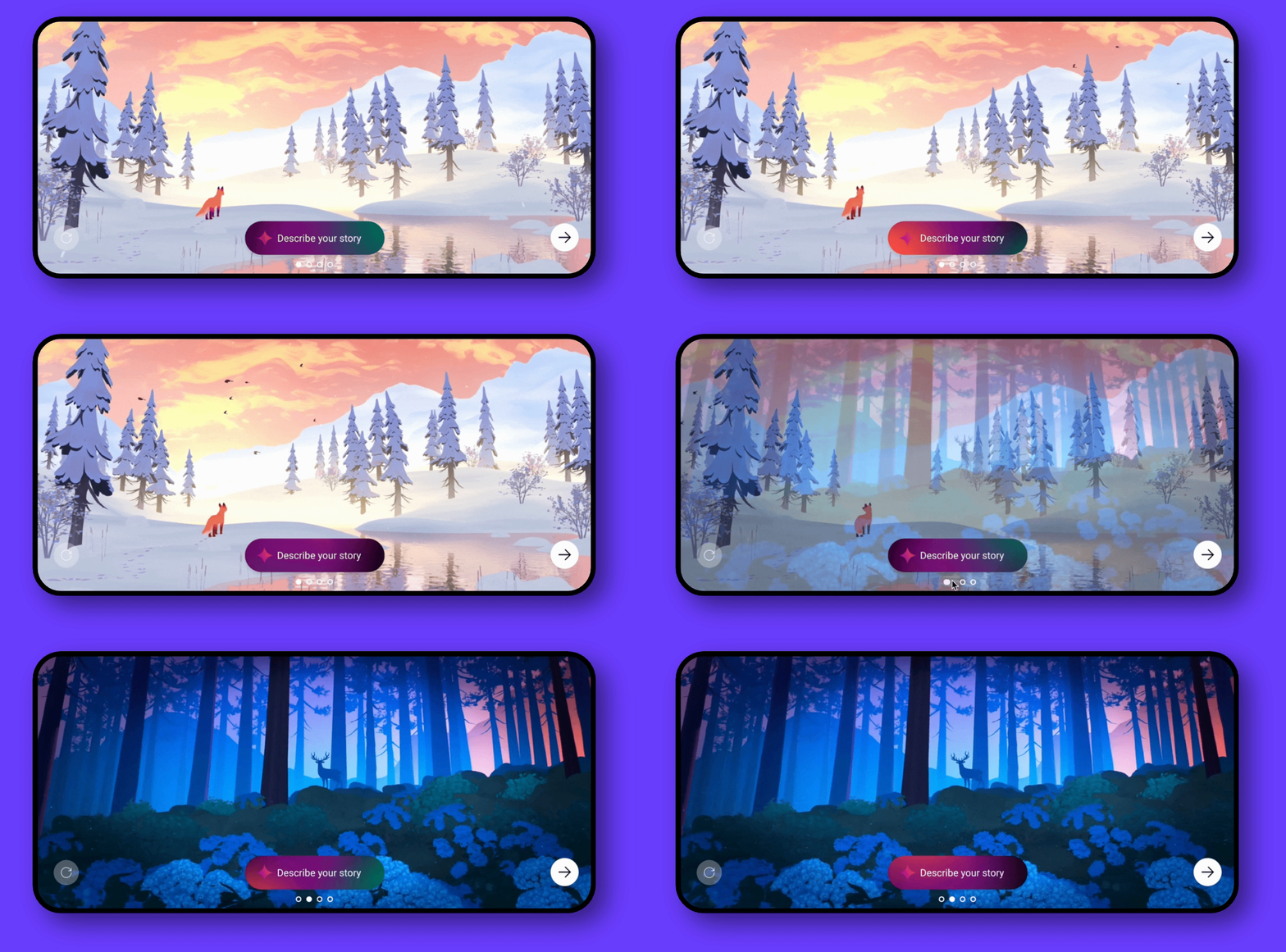
The framework was designed to absorb what's next: open prompting, remixing, editing, story generation, character creation, and capabilities that didn't yet exist, without ever needing to redesign the system from the ground up. That was the whole point: build once, scale indefinitely.
V 2 Design
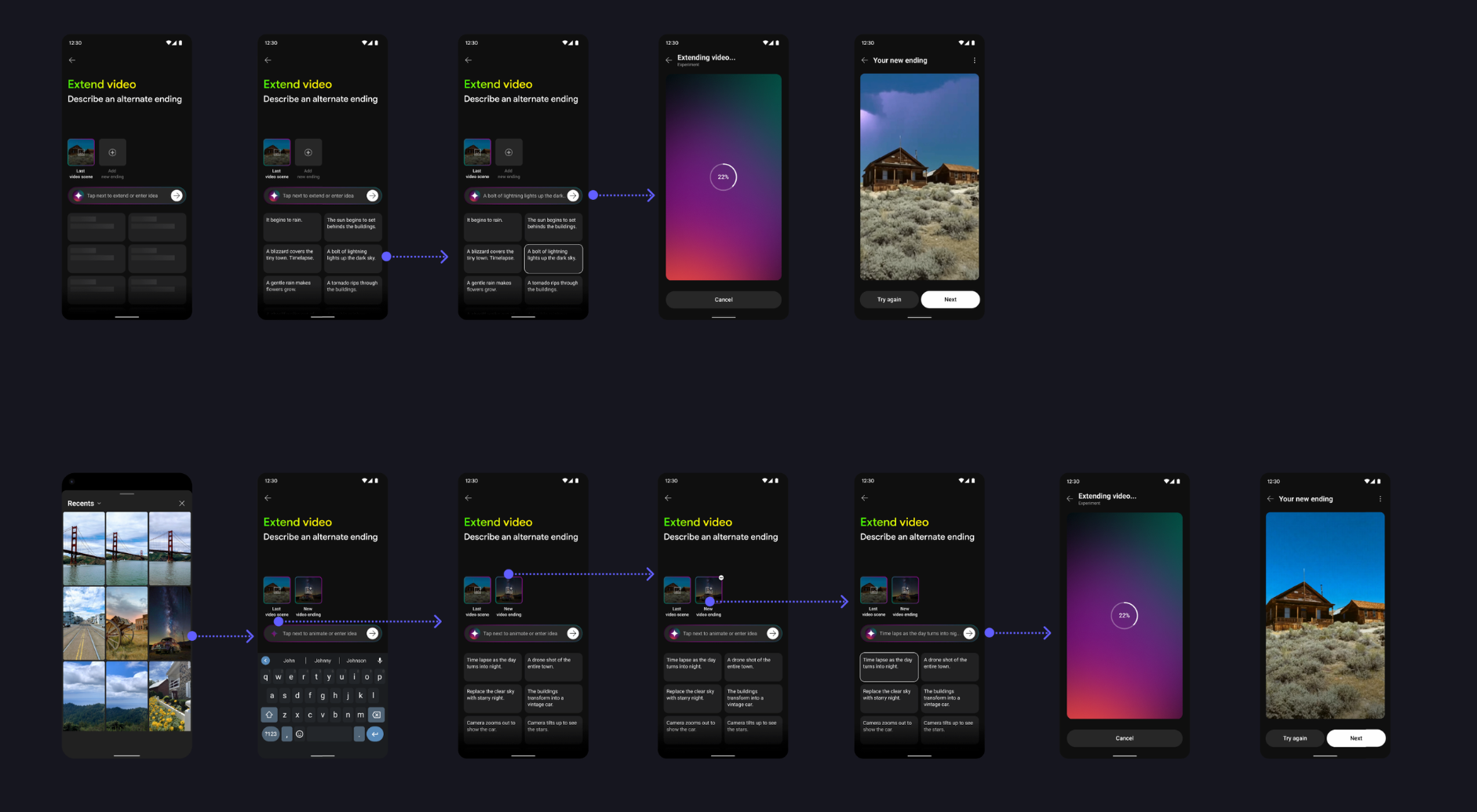
In V2 we went deeper, refining the multimodal experience across chat, microphone, style chips, and suggestions, and making the system more intelligent by introducing contextual suggestions that adapted to each user's creative intent. We shipped the updated design across the features and surfaces we had been building for: Gemini suggestions, audio generation, image animation, image-to-image effects, and more, successfully proving out our goal of a shared, modular system that could scale across all of YouTube without rebuilding from scratch each time.