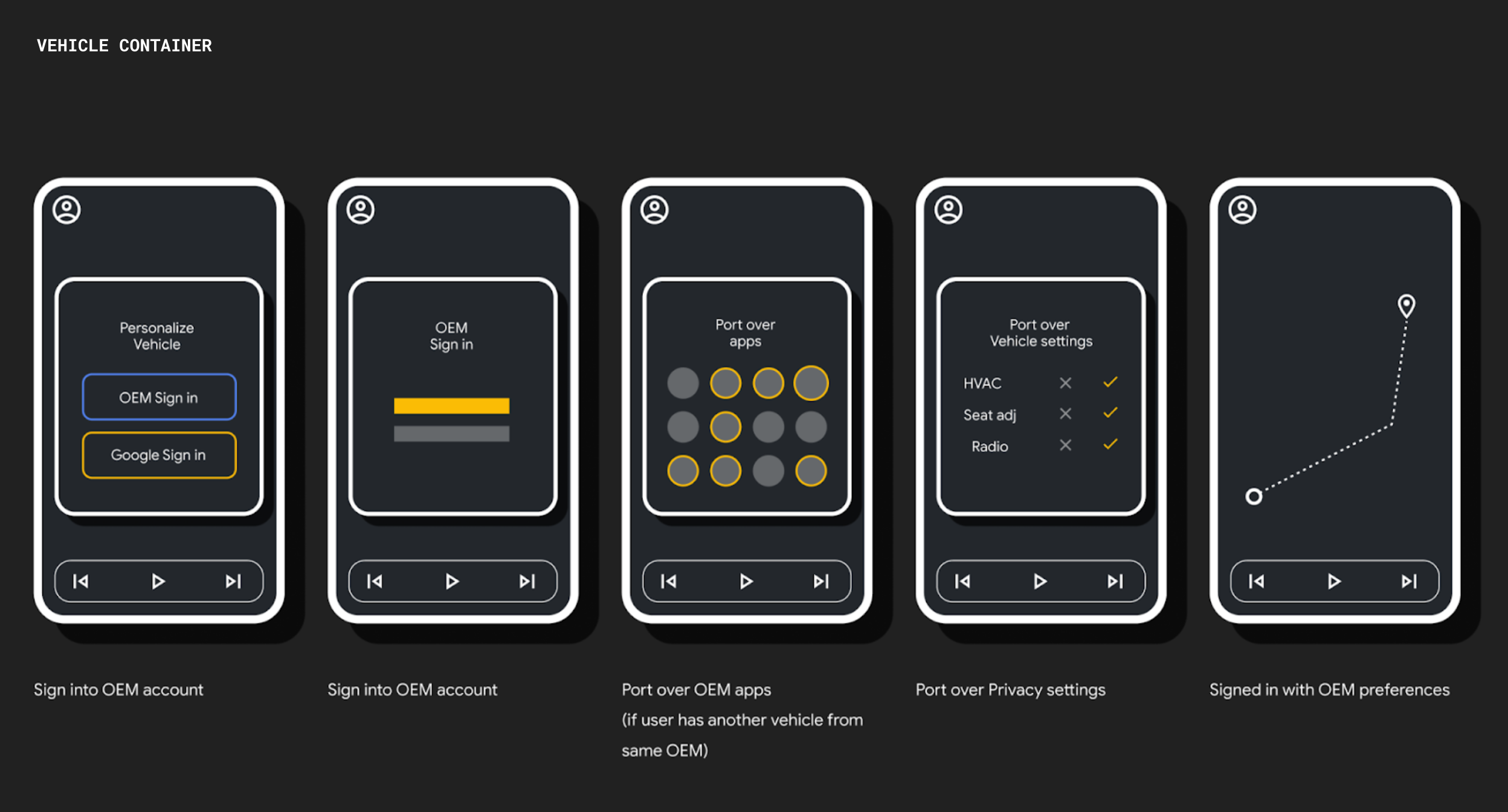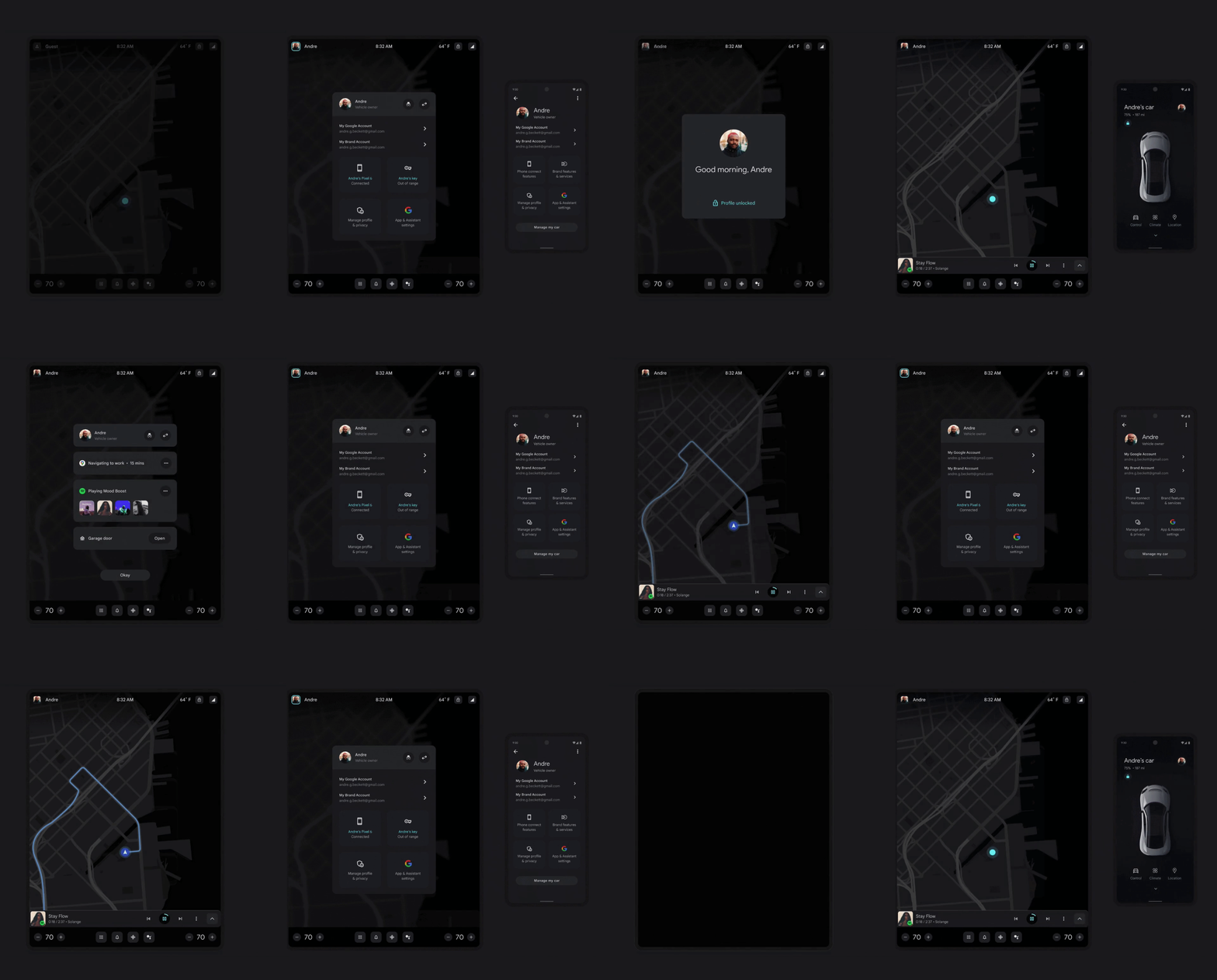
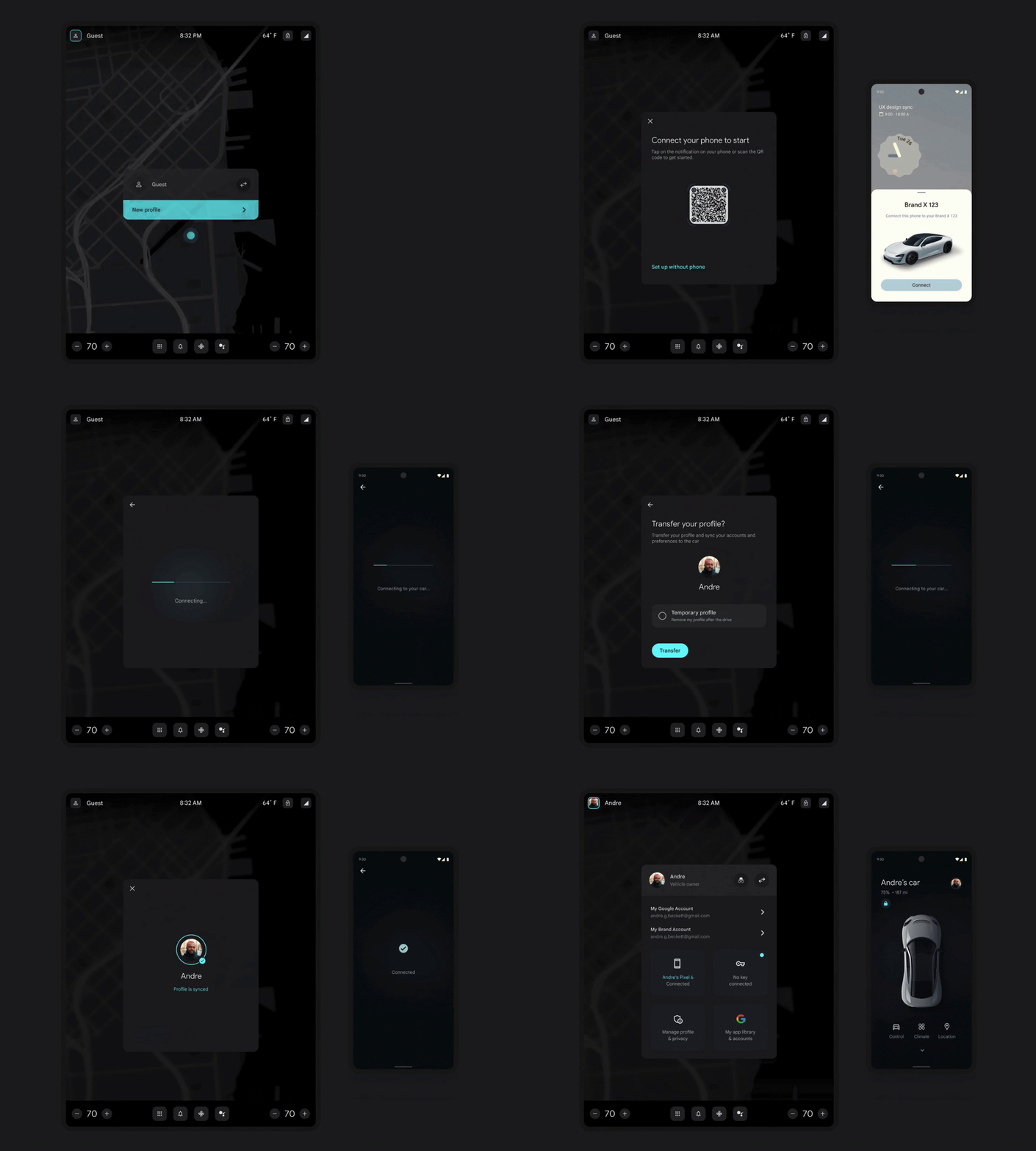
Android Auto OS powers the infotainment systems of smart vehicles partnered with Google. The Identity team within AAOS owns the identity model, personalization, and privacy experience across the entire operating system.
Opportunity
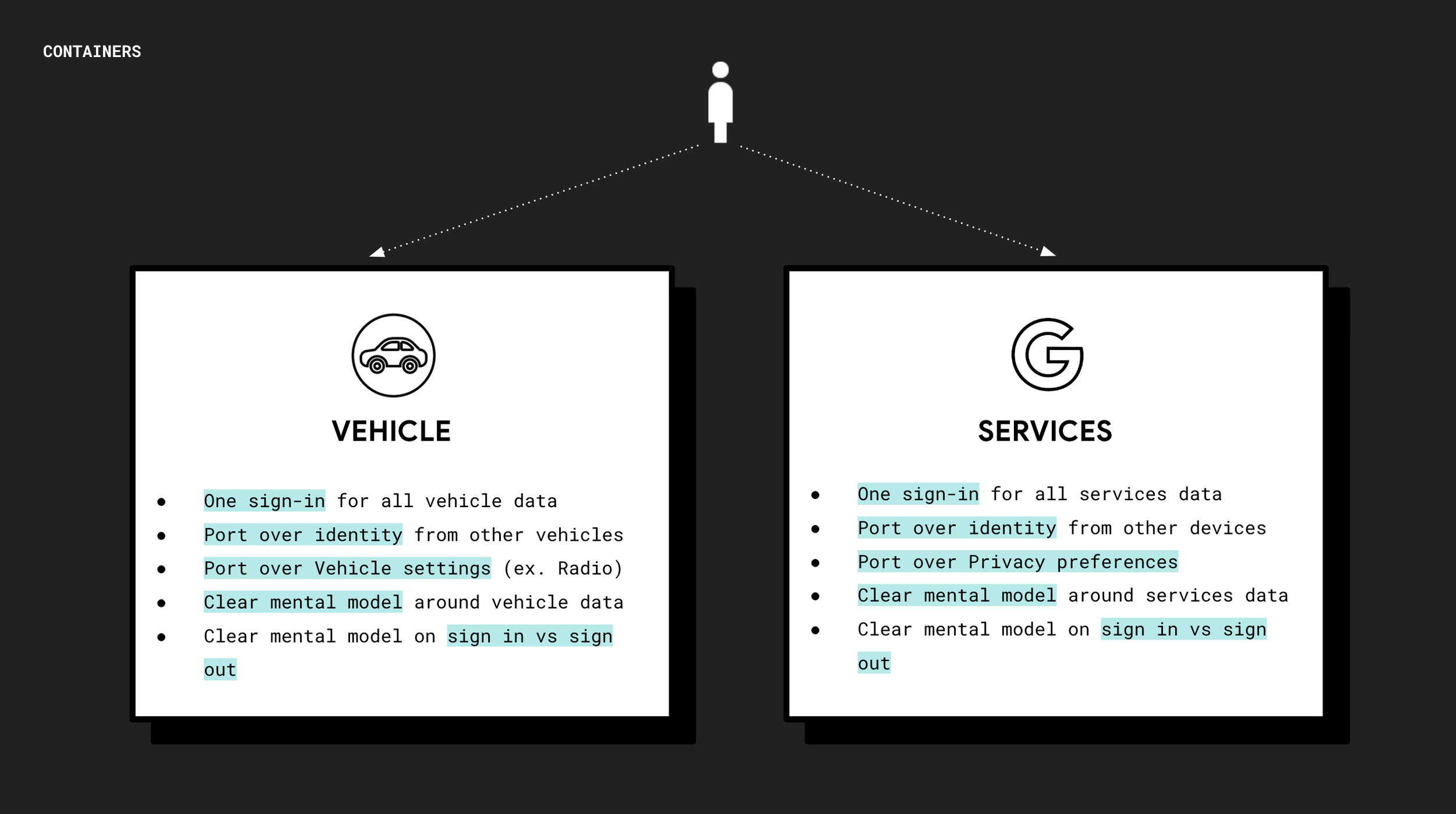
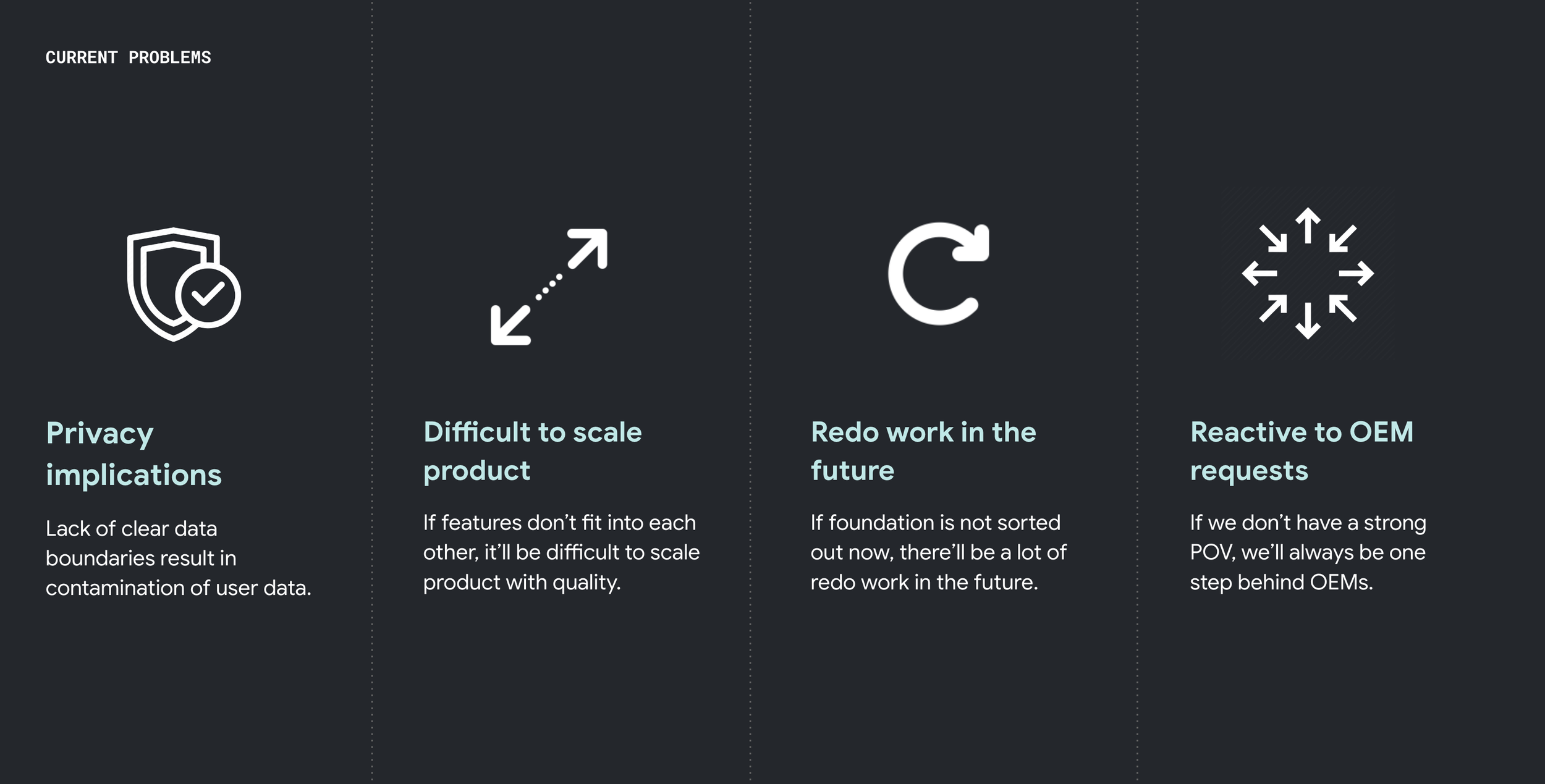
AAOS had inherited its identity model from mobile, a foundation that didn't account for the unique context of the car, and was creating friction for both users and OEM partners. The goal: design a unified identity and personalization model built specifically for Auto, one that could scale across a growing ecosystem of vehicle partners.
Role
As Senior Product Designer on the Identity team, I led a team of designers and a researchers, driving the vision, ensuring alignment across AAOS, and translating complex system thinking into implementable solutions. We worked closely with UX, PM, and engineering teams across AAOS and Google, as well as external OEM partners.
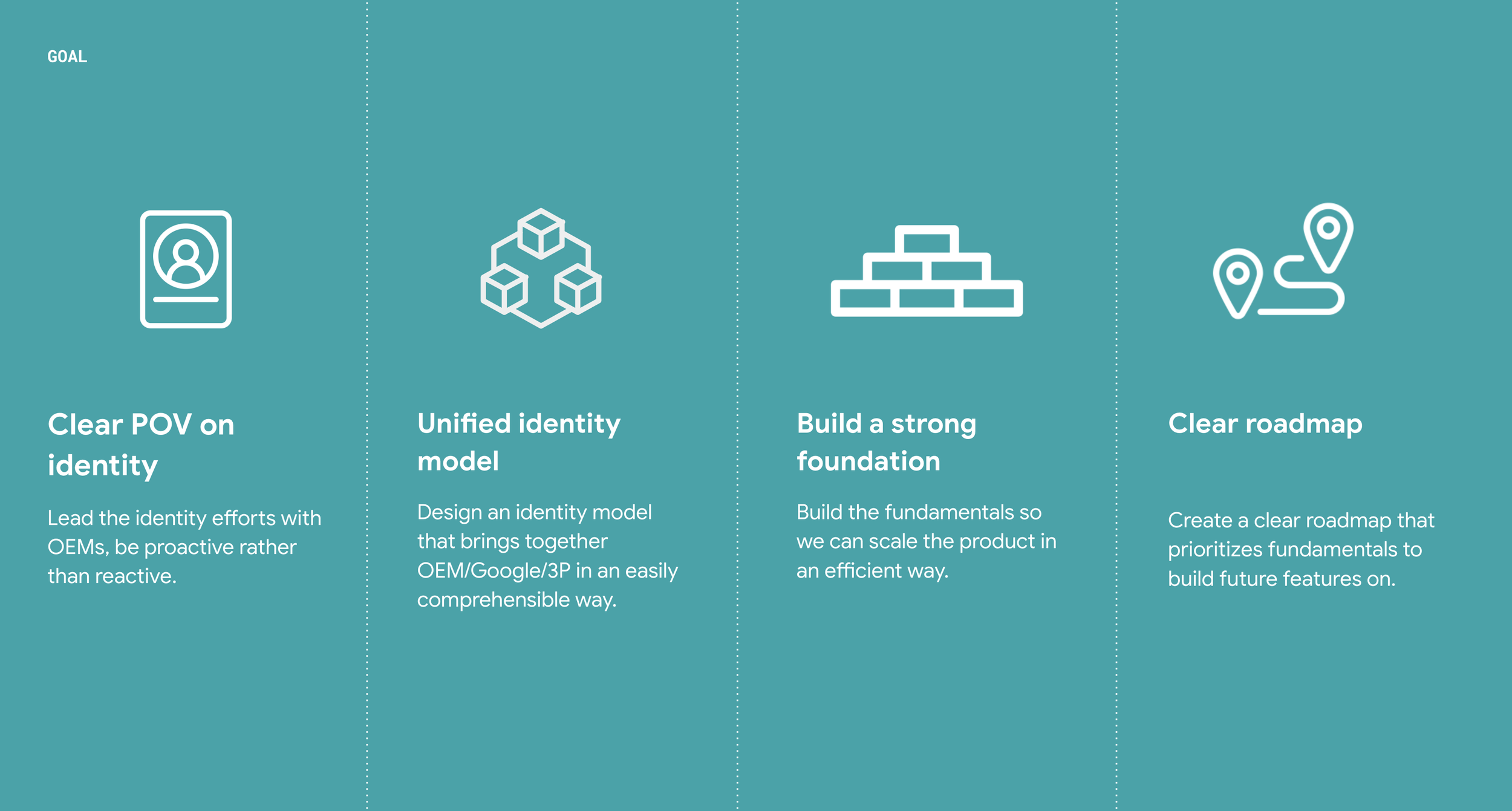
Personalization Vision
The work centered on three objectives: aligning on a clear point of view, building a unified identity model, and creating a roadmap strong enough to serve AAOS as it scaled across more OEMs. The existing model, borrowed from mobile, left real gaps in the Auto experience and created misalignment with partners. We needed something purpose-built.
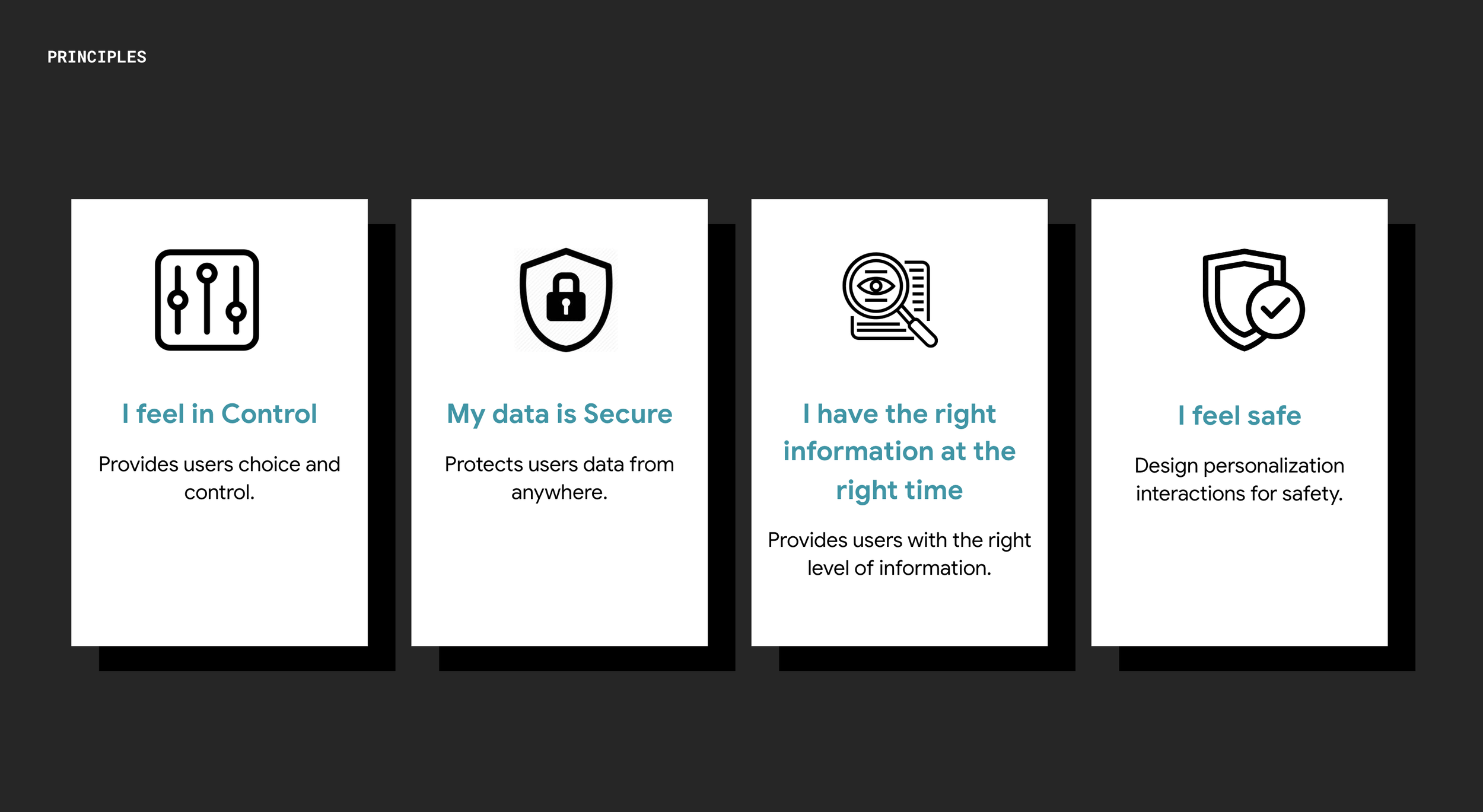
Principles
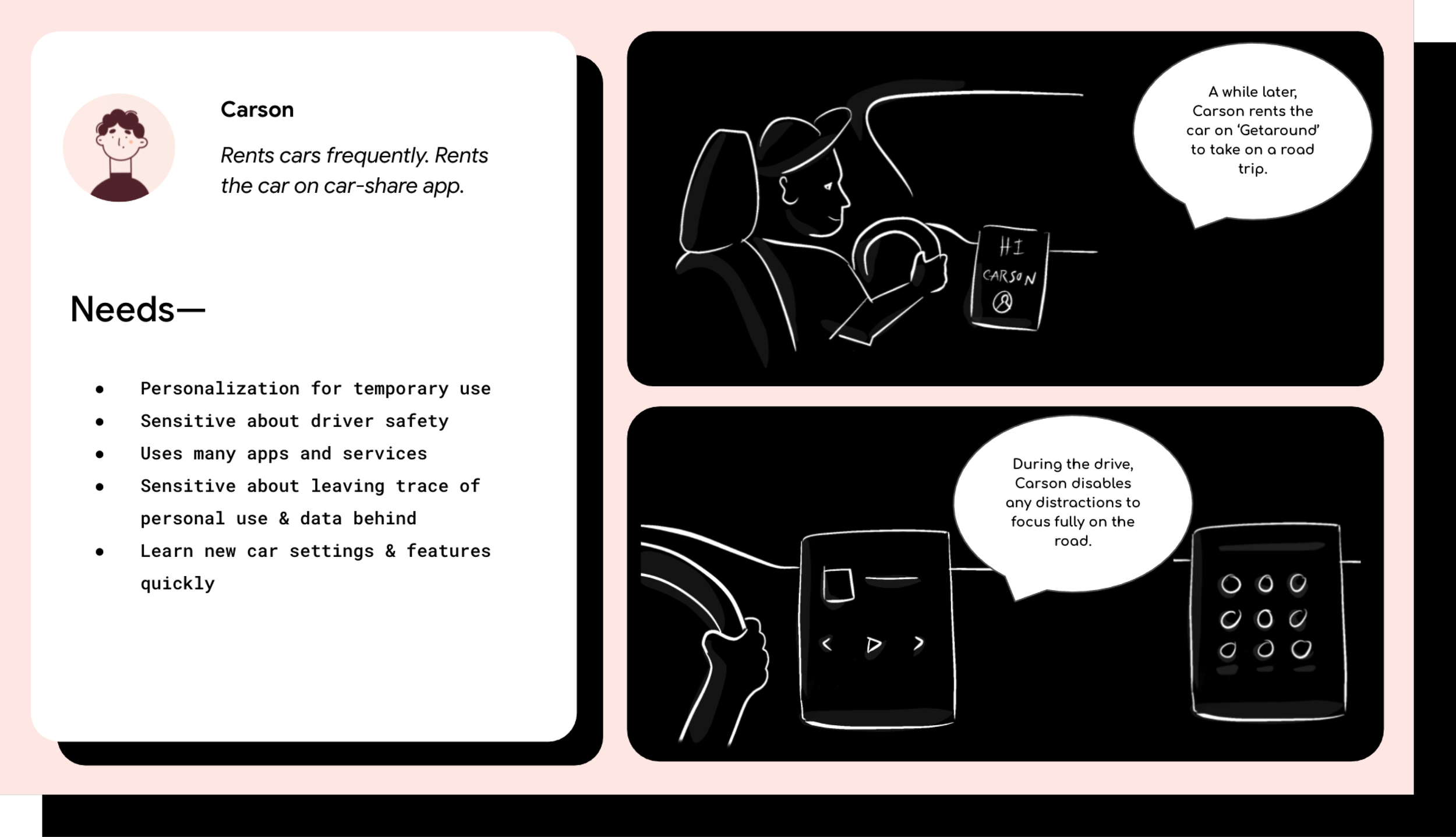
UXR surfaced four core user needs that became our design principles: choice and control, data security, contextual settings, and driver safety. Everything we designed was pressure-tested against these.
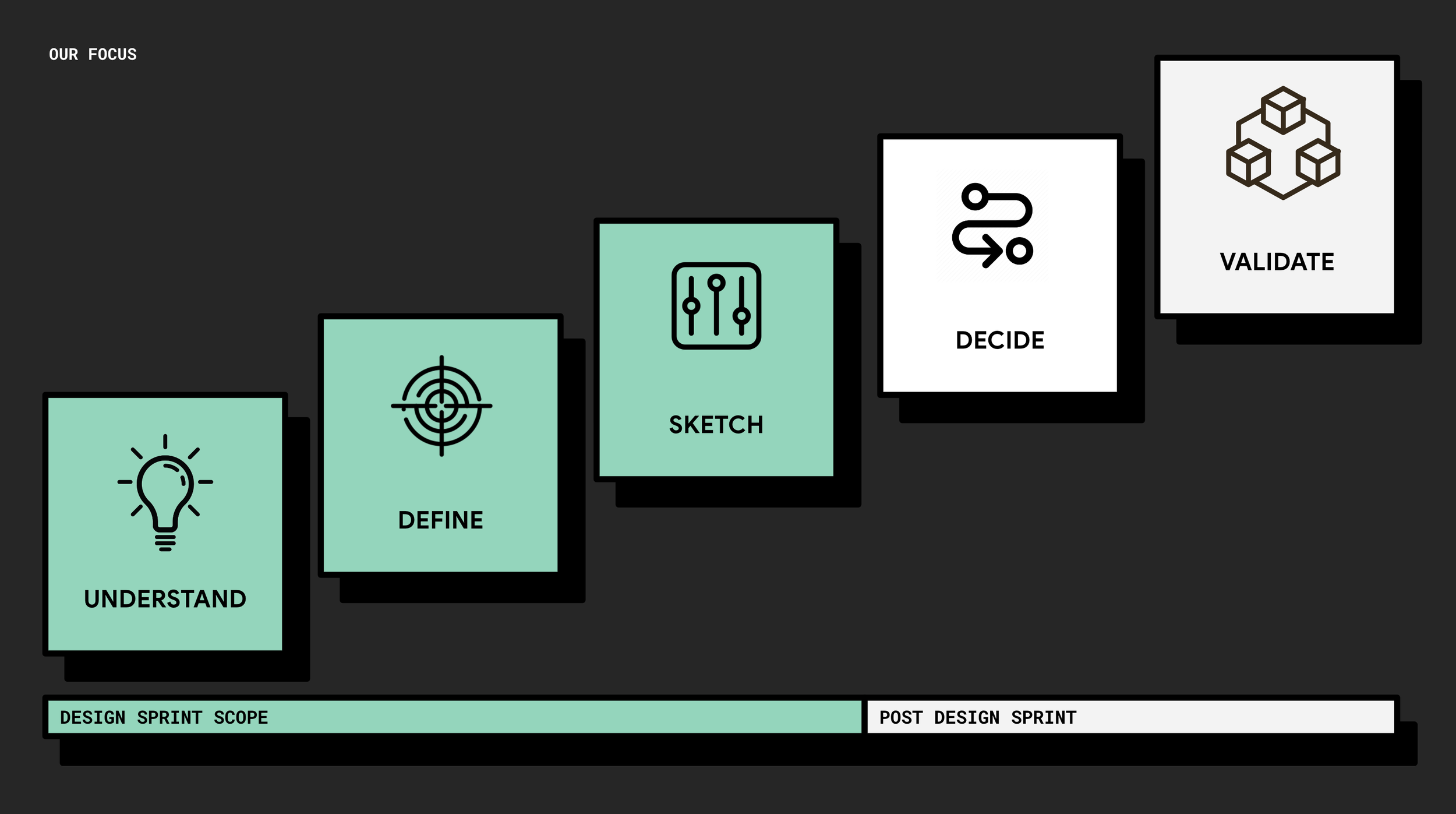
Design Sprint
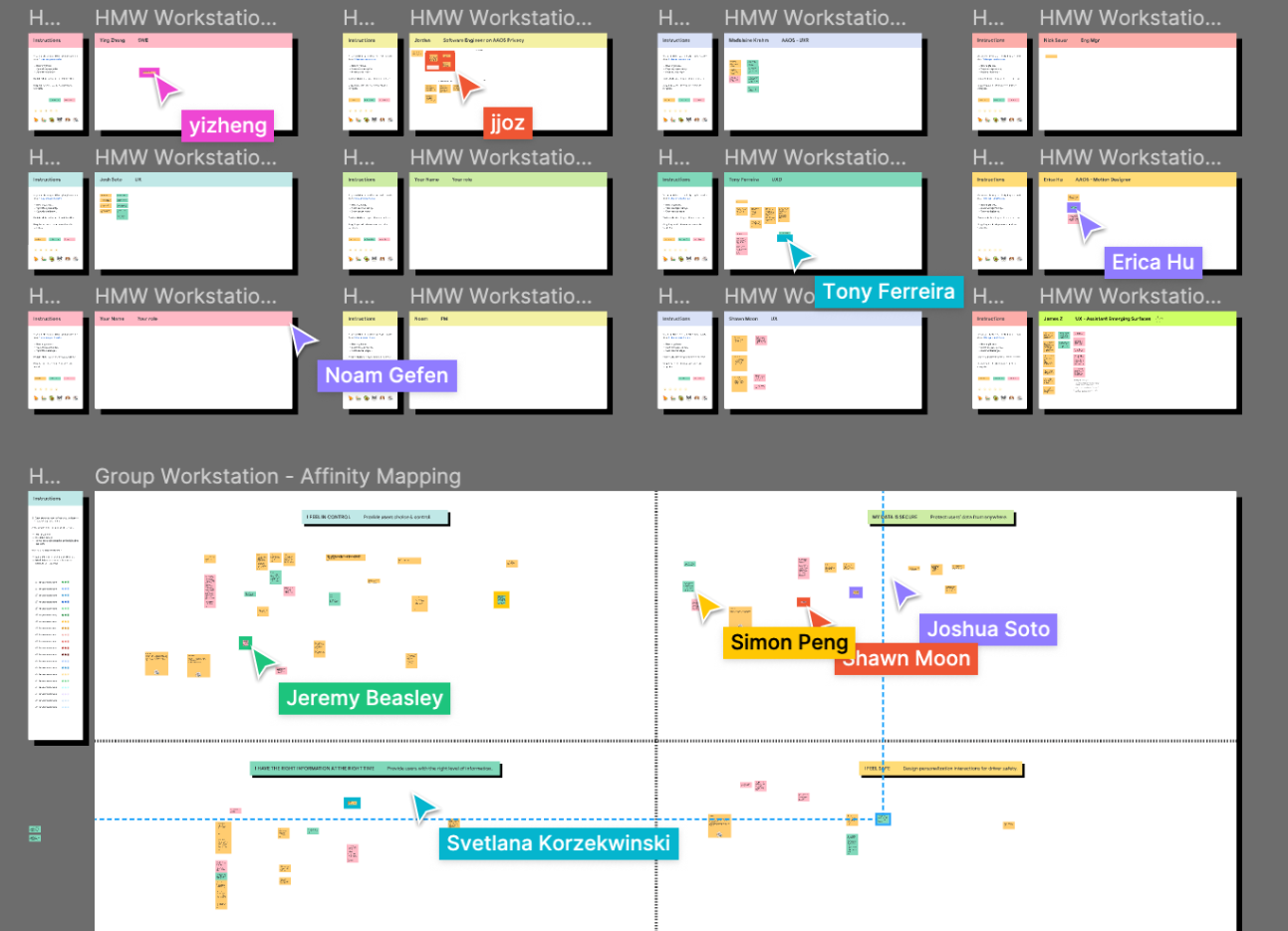
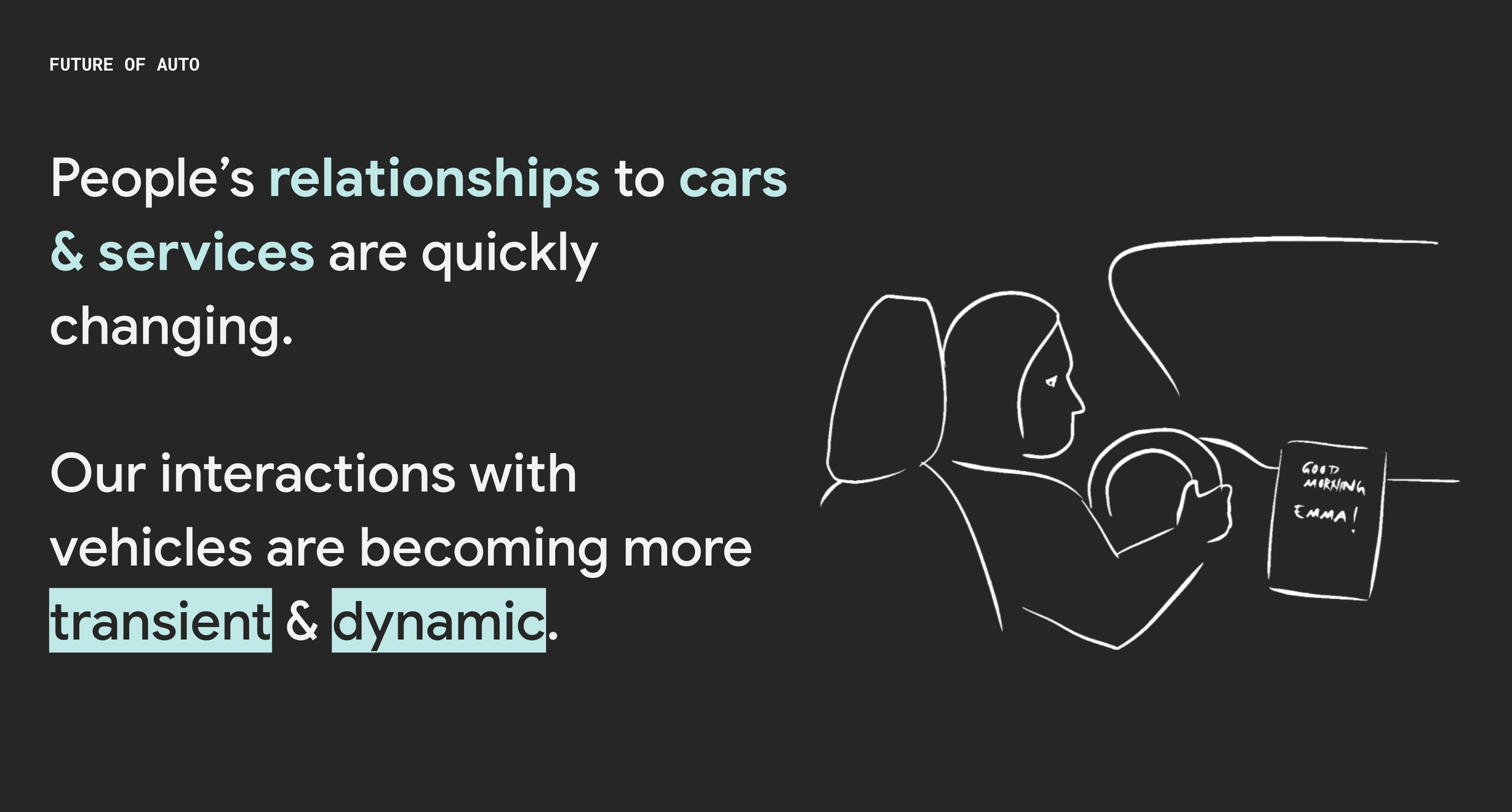
To move fast and build alignment across a complex stakeholder landscape, we organized and ran a focused design sprint to explore the future of personalization, factor in emerging technologies like ambient computing, and generate solutions around profile models, management, and types.
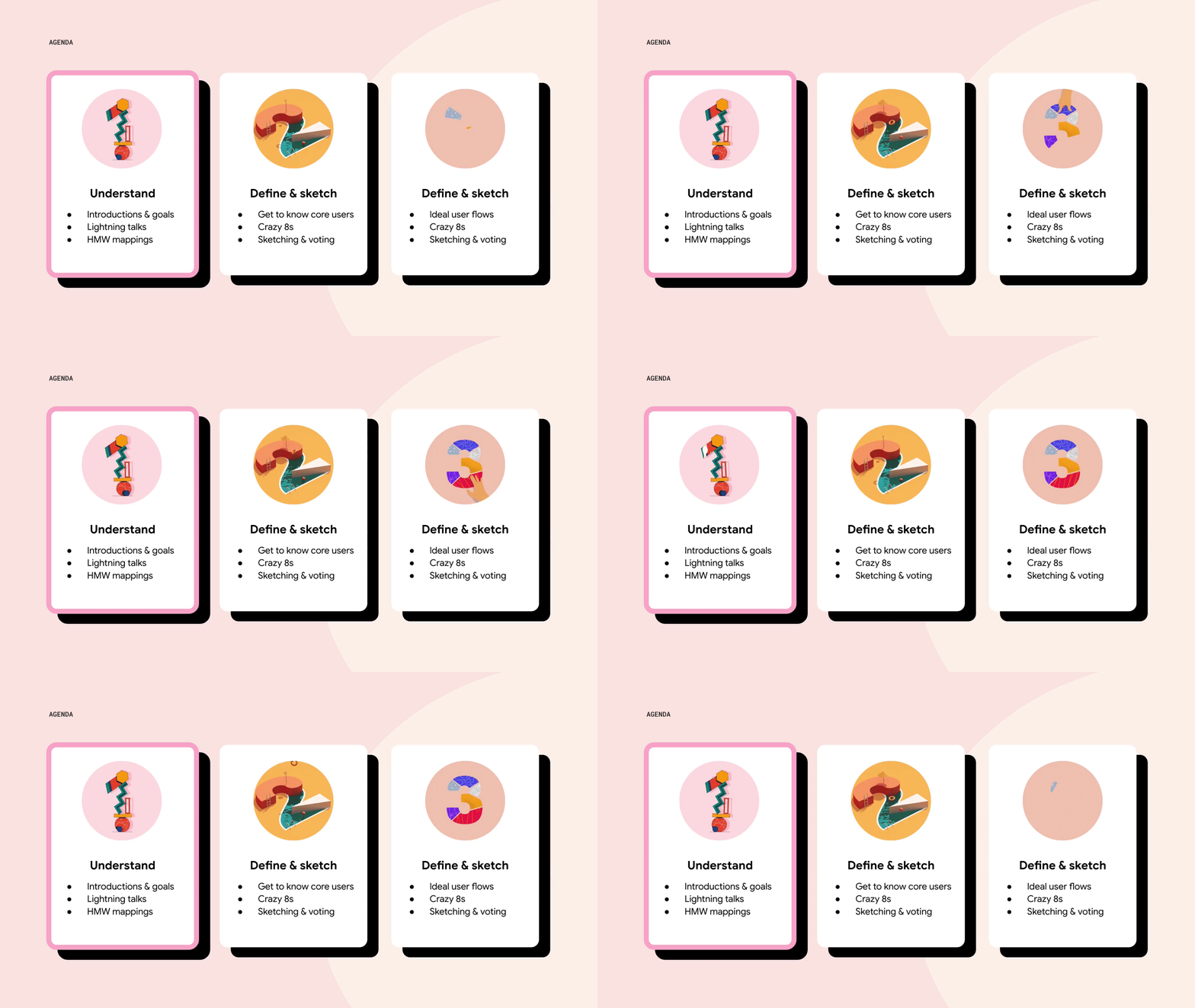
Sprint Agenda
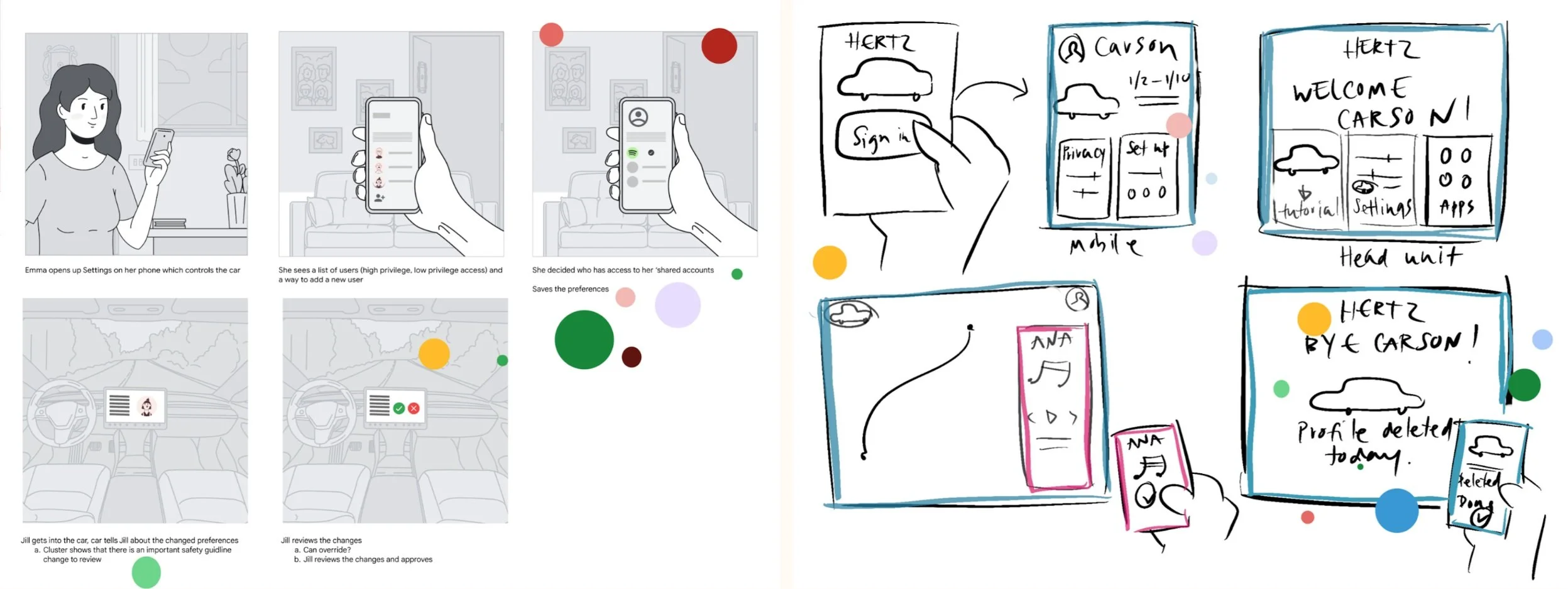
Over three days, 20 participants joined from UX, PM, engineering, and identity leads across Google. We ran How Might We exercises, Crazy 8s, individual and group sketching, and voting, moving from inspiration and idea generation to aligned user journeys and clear next steps.
Core Users
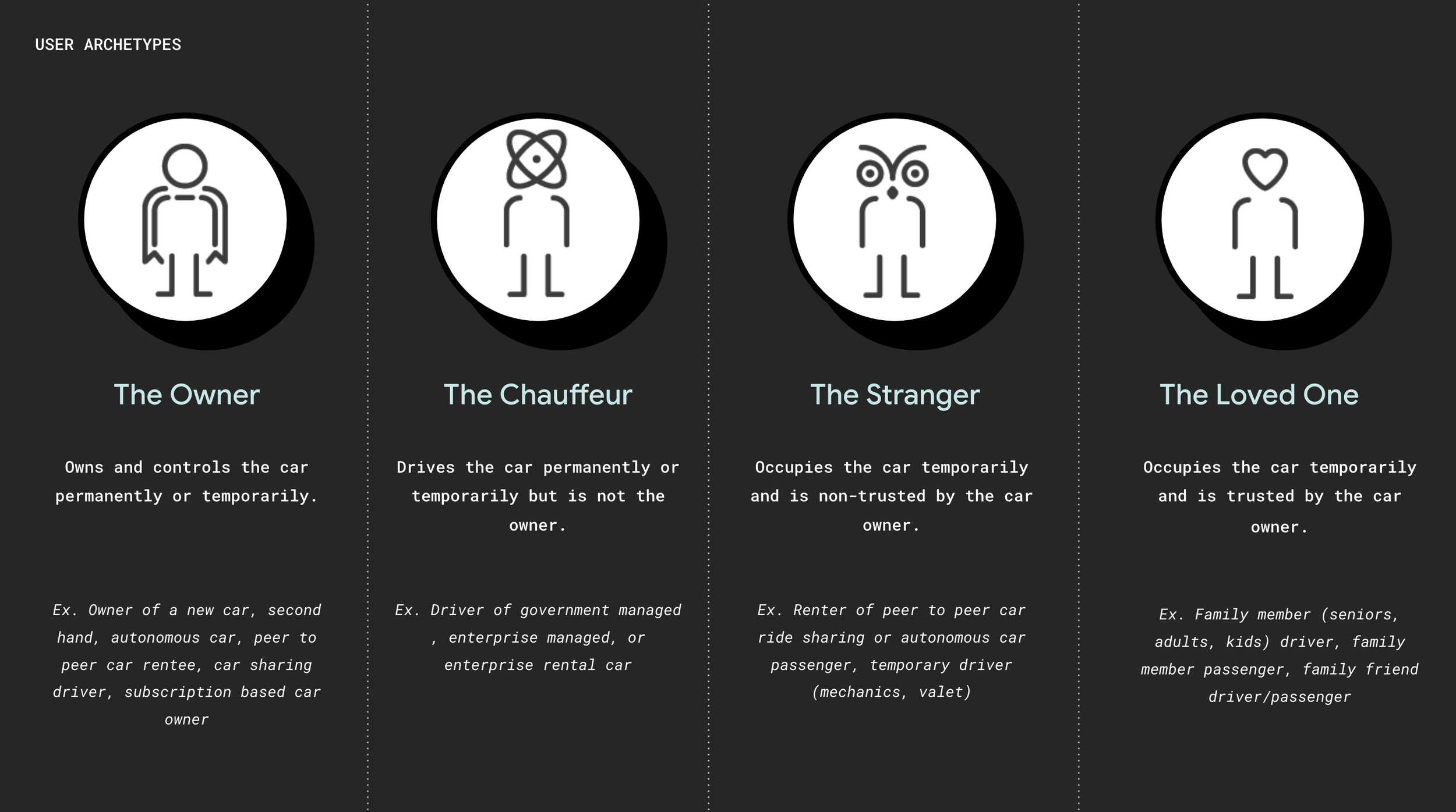
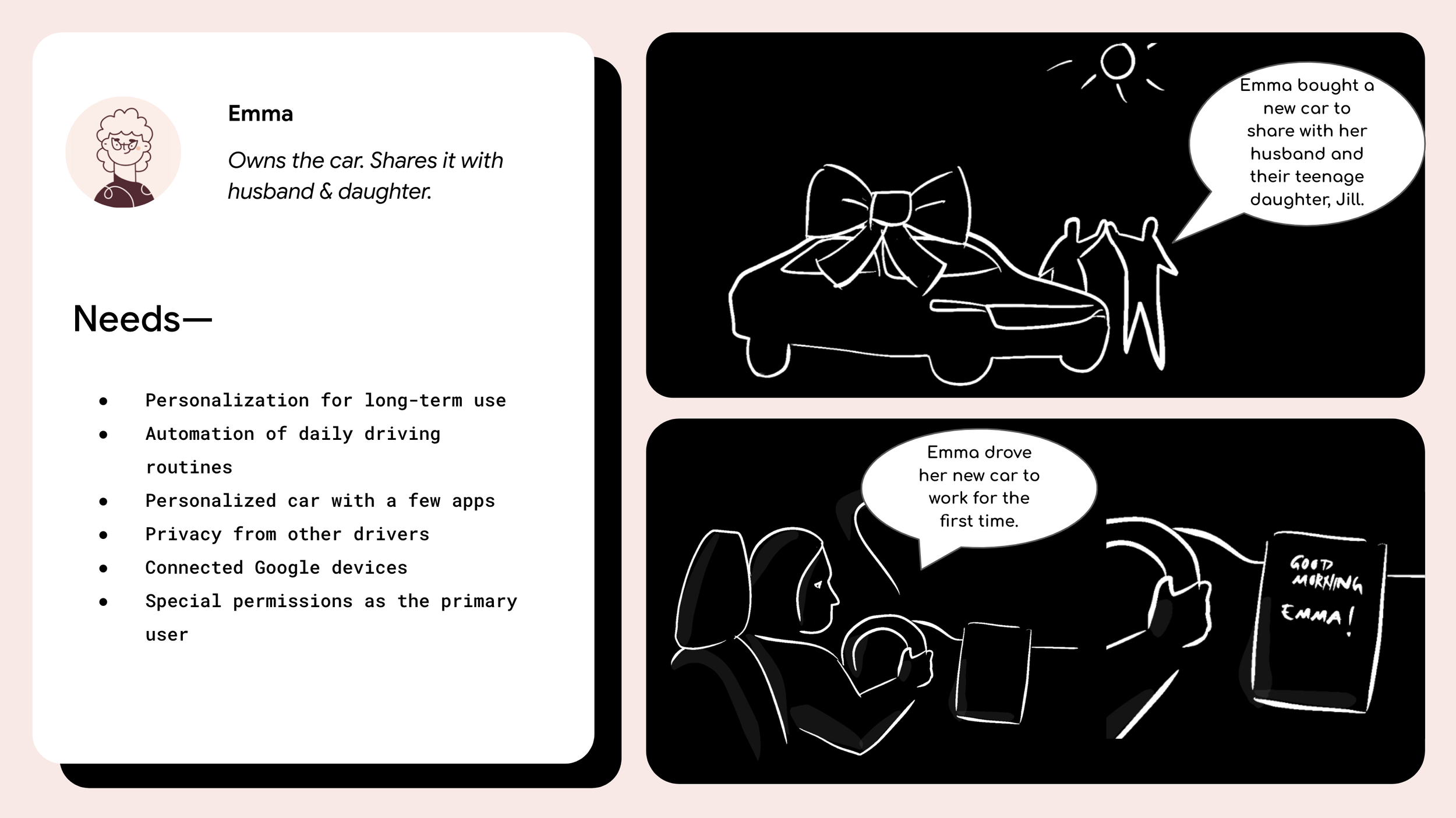
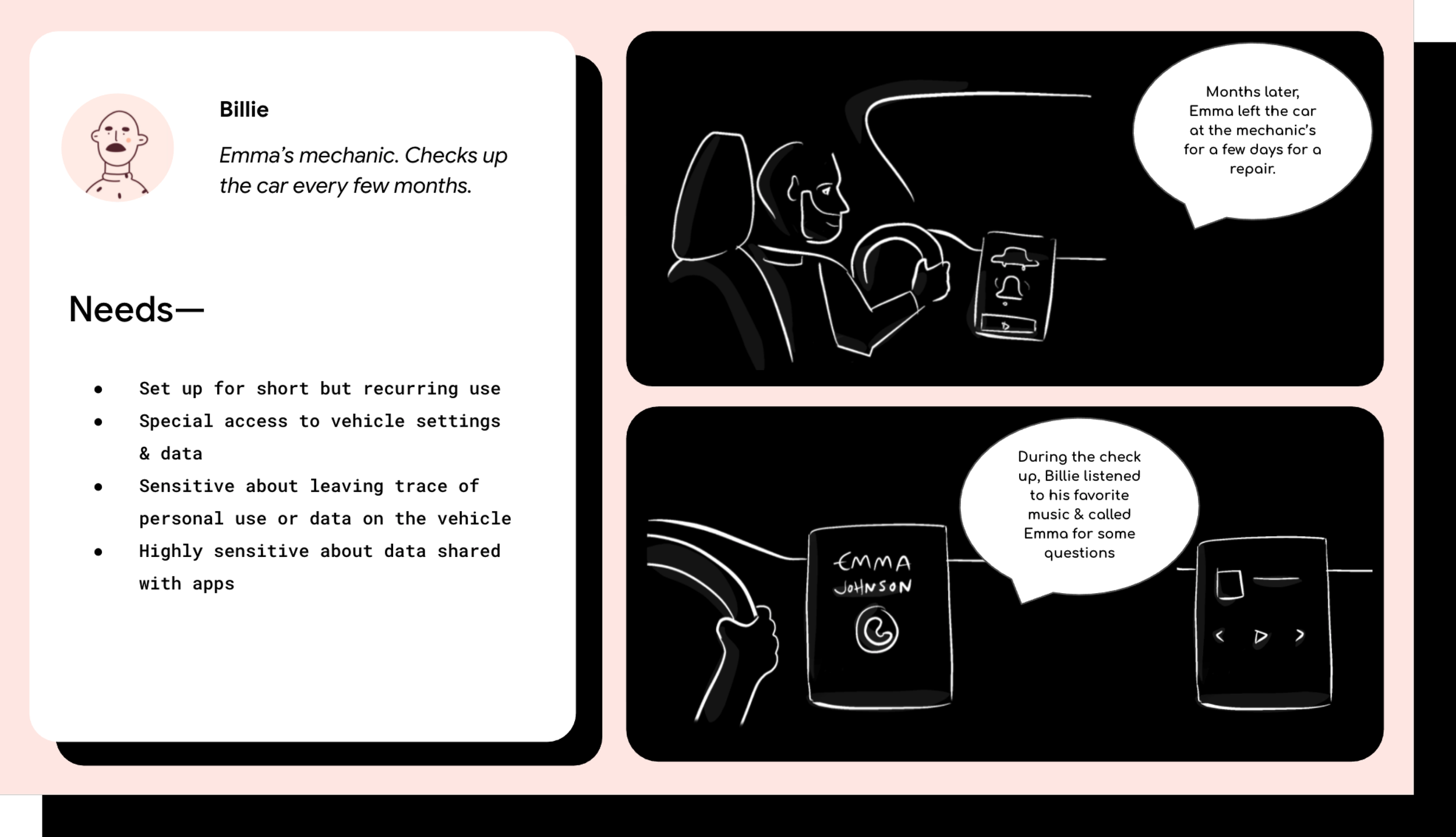
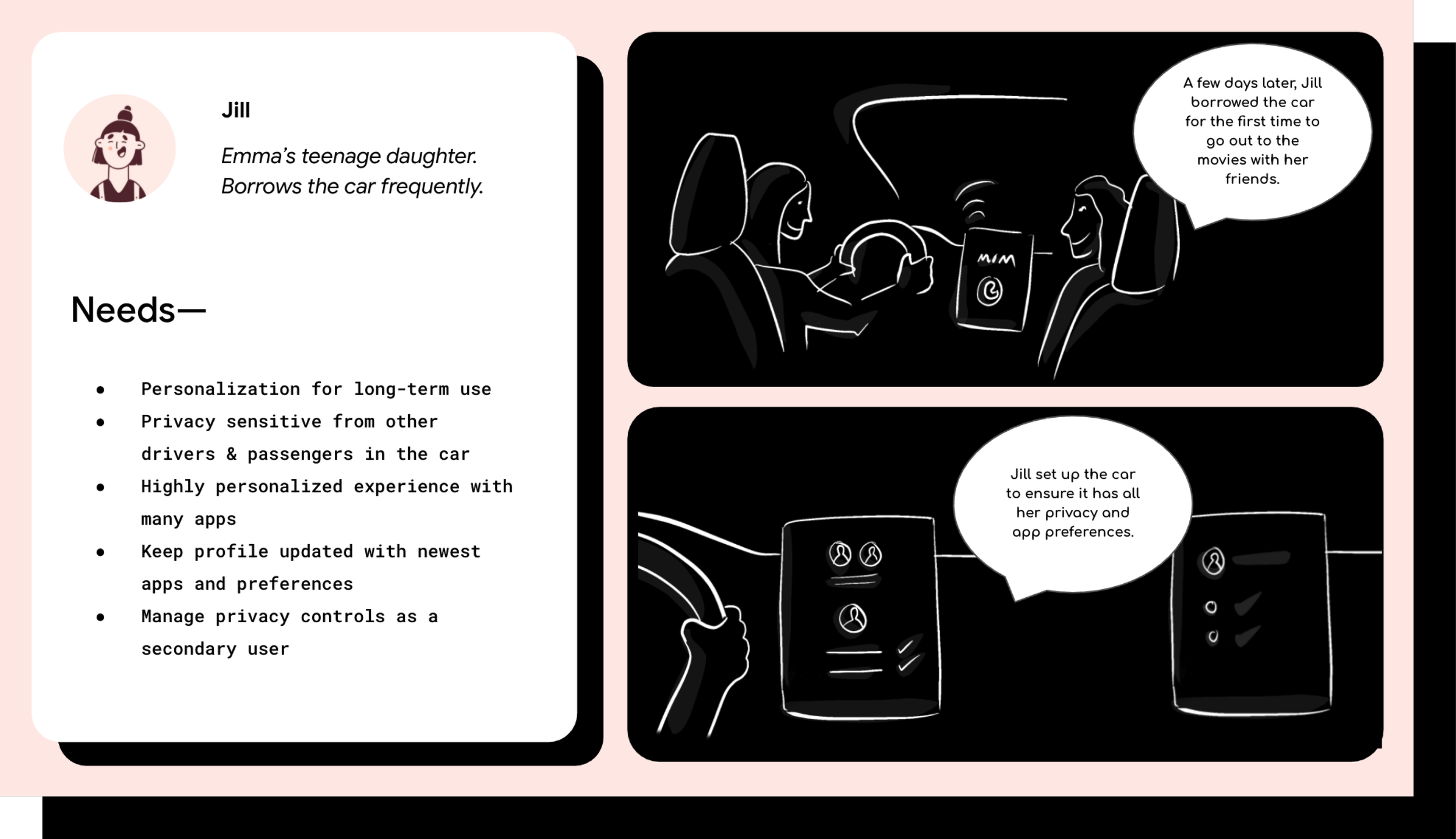
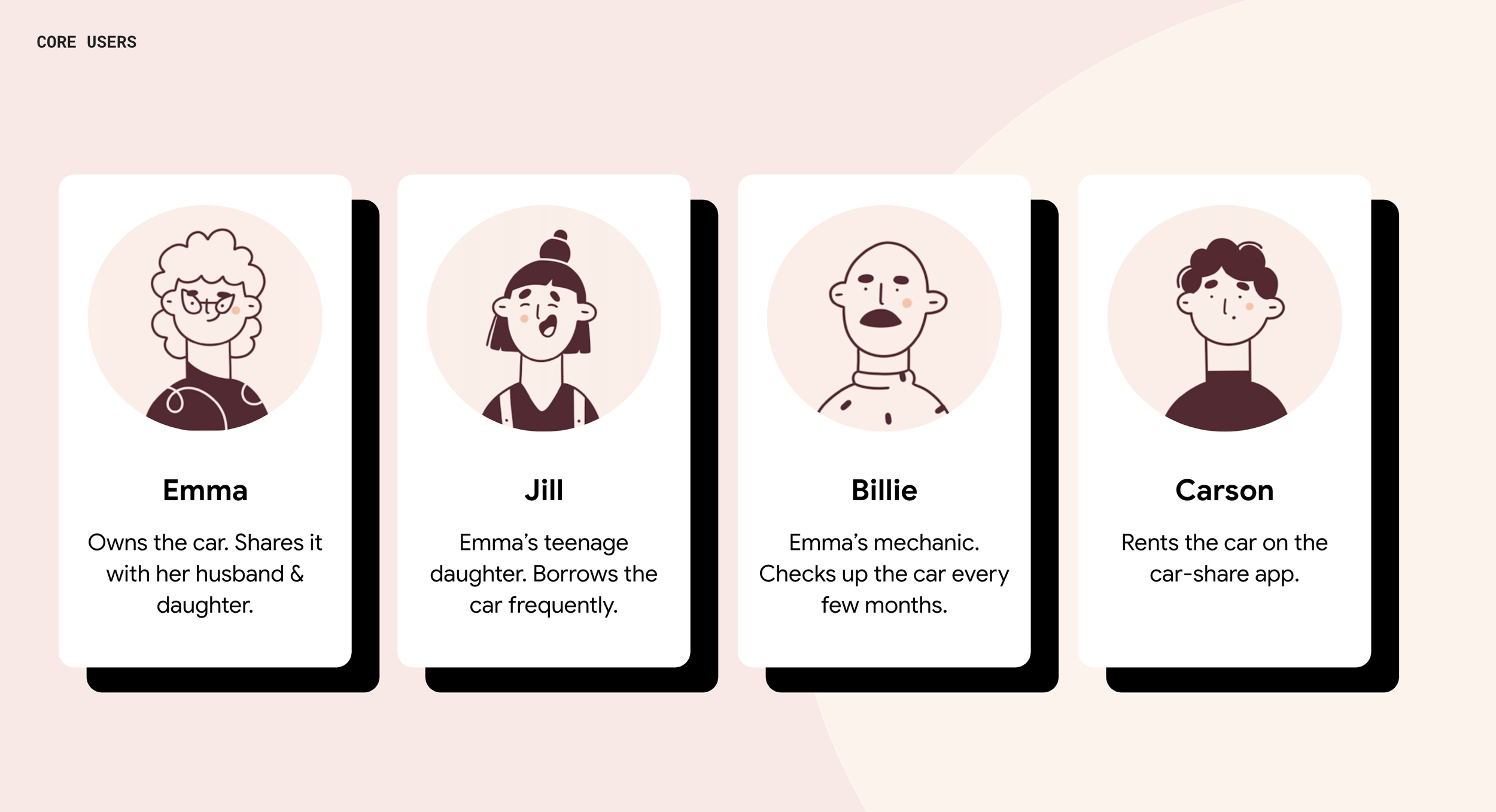
Based on UXR findings, we defined four user archetypes, the owner, the chauffeur, the stranger, and the loved one, each with distinct needs, behaviors, and goals. Sprint participants then designed the ideal journey for each, surfacing insights that wouldn't have emerged from any single team working alone.